Design for Fabric and Apparel
CBSE · Class 12 · Home Science
Summary of Design for Fabric and Apparel for CBSE Class 12 Home Science. Key concepts, important points, and chapter overview.
Interactive on Super Tutor
Studying Design for Fabric and Apparel? Get the full interactive chapter.
Quizzes, flashcards, AI doubt-solver and a step-by-step study plan — built for chapter summary and more.
1,000+ Class 12 students started this chapter today
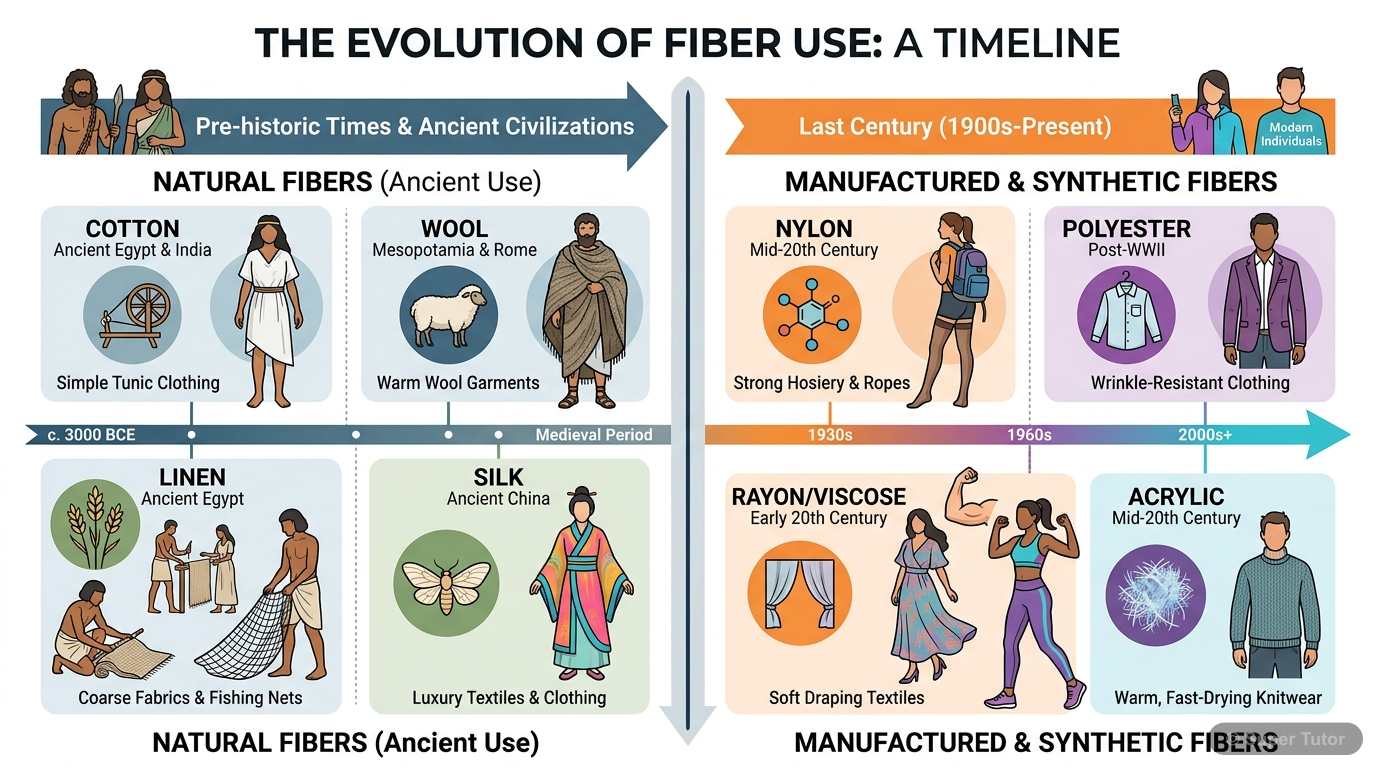
This is just one of 23+ visuals inside Super Tutor's Design for Fabric and Apparel chapter
Explore the full setOverview
Design in fabric and apparel encompasses both aesthetic appeal and functional utility. It involves understanding the fundamental elements (color, texture, line, shape) and principles (proportion, balance, emphasis, rhythm, harmony) that create visually pleasing and purposeful textile products. This
Key Concepts
Design is the human power
Design is the human power to conceive, plan, and realize products that serve human beings. It combines aesthetic satisfaction with functional utility,
Structural design depends on form
Structural design depends on form and basic processing (fiber type, yarn construction, weaving techniques). Applied design is superimposed ornamentati
Color is the reflection of light
Color is the reflection of light striking surfaces. It has three aspects: Hue (color name), Value (lightness/darkness), and Intensity (brightness/puri
Systematic combinations of colors including monochromatic
Systematic combinations of colors including monochromatic (one hue in different values), analogous (neighboring colors), complementary (opposite color
The visual and tactile quality
The visual and tactile quality of materials, described by how it looks (shiny, dull), behaves (stiff, flowing), and feels (smooth, rough). Determined
Learning Objectives
- Understand the basic concepts and definitions of design in textile context
- Identify and explain the elements of design: color, texture, line, and shape
- Apply design principles: proportion, balance, emphasis, rhythm, and harmony
- Analyze color theory including hue, value, and intensity
- Explore different color schemes and harmonies
Frequently Asked Questions
What are the important topics in Design for Fabric and Apparel for CBSE Class 12 Home Science?
How to score full marks in Design for Fabric and Apparel — CBSE Class 12 Home Science?
Sources & Official References
- NCERT Official — ncert.nic.in
- CBSE Academic — cbseacademic.nic.in
- CBSE Official — cbse.gov.in
- National Education Policy 2020 — education.gov.in
Content is aligned to the official syllabus. Refer to the board website for the latest curriculum.
More resources for Design for Fabric and Apparel
Important Questions
Practice with board exam-style questions
Syllabus
What topics to cover
Revision Notes
Key points for last-minute revision
Study Plan
Step-by-step plan to ace this chapter
Flashcards
Quick-fire cards for active recall
Formula Sheet
All formulas in one place
Practice Quiz
Test yourself with a quick quiz
Concept Maps
See how topics connect visually
For serious students
Get the full Design for Fabric and Apparel chapter — for free.
Quizzes, flashcards, AI doubt-solver and a step-by-step study plan for CBSE Class 12 Home Science.