Social Movements
CBSE · Class 12 · Sociology
Summary of Social Movements for CBSE Class 12 Sociology. Key concepts, important points, and chapter overview.
Interactive on Super Tutor
Studying Social Movements? Get the full interactive chapter.
Quizzes, flashcards, AI doubt-solver and a step-by-step study plan — built for chapter summary and more.
1,000+ Class 12 students started this chapter today
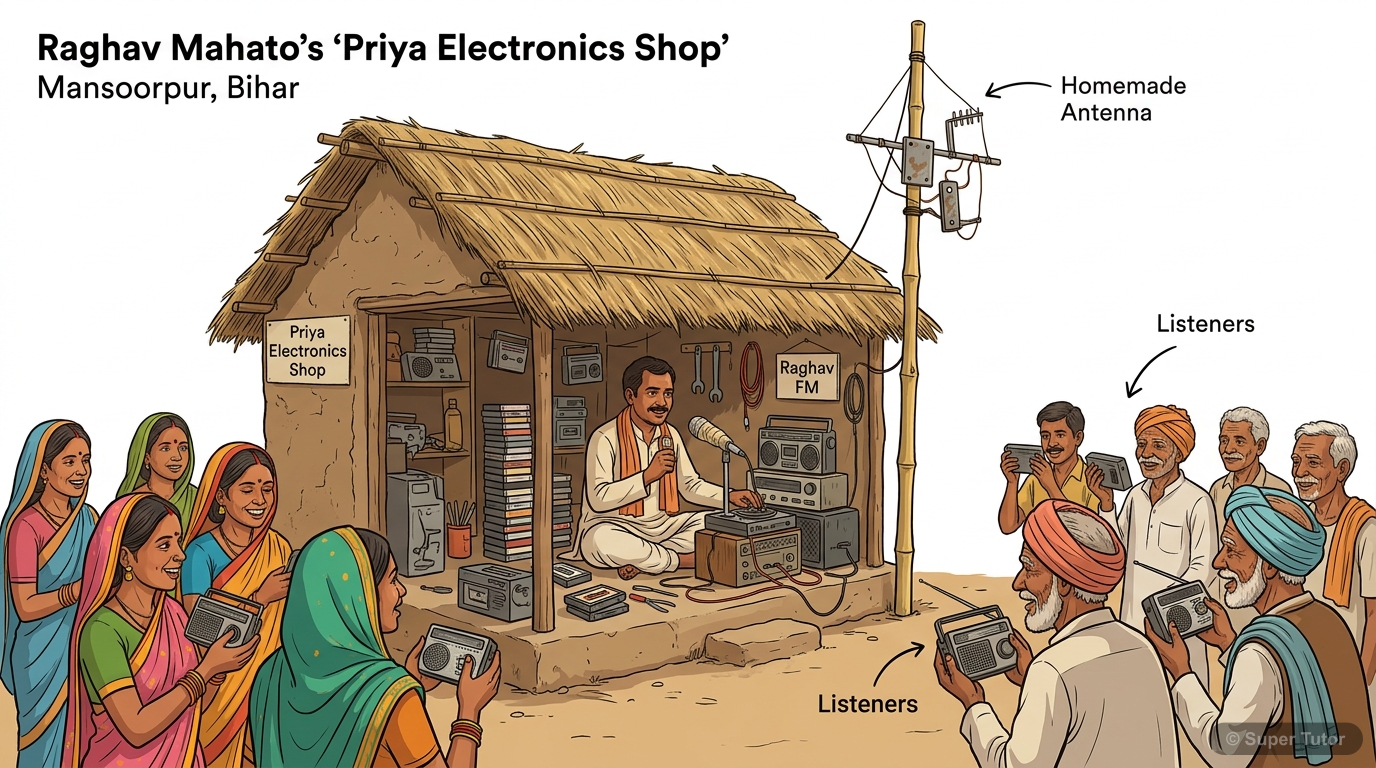
Learn better with visuals Super Tutor has hundreds of illustrations like this across every chapter — all free to try.
Get startedOverview
Social movements are collective efforts by groups of people to bring about or resist social change. They have shaped the world we live in today, from gaining voting rights and workers' benefits to achieving independence from colonial rule. In India, social movements continue to play a crucial role i
Key Concepts
A sustained collective action over time
A sustained collective action over time directed against the state or other institutions, marked by organization, shared objectives, and ideologies. I
Old movements were class
Old movements were class-based, led by political parties and trade unions, focused on economic inequality and power redistribution. New movements addr
Movements that arise in opposition
Movements that arise in opposition to social movements, defending the status quo. Examples include opposition to sati abolition, girls' education, and
A broader term referring to organizations
A broader term referring to organizations and movements outside the state and market, including NGOs, women's groups, environmental groups, and tribal
Redemptive movements focus on personal transformation
Redemptive movements focus on personal transformation (Narayana Guru's reforms), reformist movements seek gradual change (Right to Information), and r
Learning Objectives
- Understand the concept and characteristics of social movements
- Differentiate between old and new social movements
- Analyze various types of social movements in India including peasant, workers', Dalit, tribal, and women's movements
- Examine the relationship between social movements and social change
- Evaluate the role of social movements in democracy and development
Frequently Asked Questions
What are the important topics in Social Movements for CBSE Class 12 Sociology?
How to score full marks in Social Movements — CBSE Class 12 Sociology?
Sources & Official References
- NCERT Official — ncert.nic.in
- CBSE Academic — cbseacademic.nic.in
- CBSE Official — cbse.gov.in
- National Education Policy 2020 — education.gov.in
Content is aligned to the official syllabus. Refer to the board website for the latest curriculum.
More resources for Social Movements
Important Questions
Practice with board exam-style questions
Syllabus
What topics to cover
Revision Notes
Key points for last-minute revision
Study Plan
Step-by-step plan to ace this chapter
Flashcards
Quick-fire cards for active recall
Formula Sheet
All formulas in one place
Practice Quiz
Test yourself with a quick quiz
Concept Maps
See how topics connect visually
For serious students
Get the full Social Movements chapter — for free.
Quizzes, flashcards, AI doubt-solver and a step-by-step study plan for CBSE Class 12 Sociology.