Biodiversity and Conservation — Study Plan
AP EAPCET · Biology
Step-by-step study plan for Biodiversity and Conservation — structured approach to mastering this chapter for AP EAPCET Biology.
Interactive on Super Tutor
Studying Biodiversity and Conservation? Get the full chapter — free.
Practice questions, revision notes, formula sheet and AI doubt-solver — built for AP EAPCET Biology.
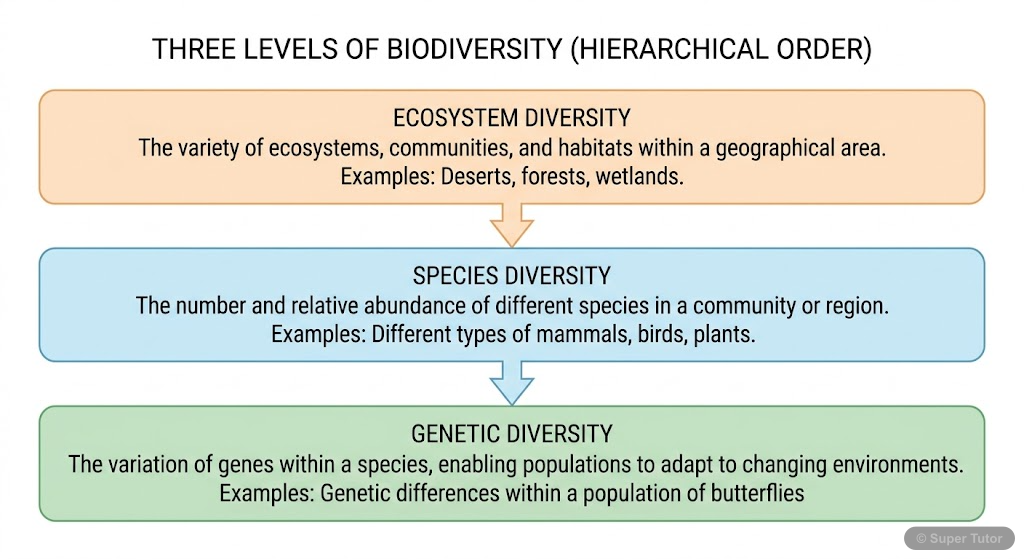
Learn better with visuals Super Tutor has hundreds of illustrations like this across every chapter — all free to try.
Get startedHow to Study Biodiversity and Conservation
A structured approach to studying Biodiversity and Conservation for AP EAPCET Biology.
Study Plan for Biodiversity and Conservation
Day 1–2: Learn the Theory
Study the chapter thoroughly. Note down definitions, formulas, and key concepts.
Day 3: Practice Problems
Solve practice questions and previous year AP EAPCET problems. There are 98 questions available for this chapter.
Day 4: Revise & Test
Revise key formulas and concepts without looking at notes. Take a practice quiz to test your understanding.
What to Focus On
- Biodiversity includes genetic, species, and ecosystem diversity levels
- Over 70% of described species are animals, with insects comprising 70% of animal species
- India is a mega-diversity country with 10 biogeographical regions
- Species diversity decreases from equator to poles
- Tropical environments support higher biodiversity due to stability and energy
- Species-area relationship follows logarithmic pattern
- Direct economic benefits include food, medicine, and industrial products
- Ecosystem services provide oxygen, pollination, and climate regulation
- Every species has intrinsic value beyond economic considerations
Common Mistakes to Avoid
Higher biodiversity always means better ecosystem stability and productivity
Tropical regions have higher biodiversity only because they are warmer
The species-area relationship means bigger areas always have proportionally more species
Want a personalised study plan?
Super Tutor creates a day-by-day plan for AP EAPCET Biology that adapts to your exam date and pace.
Create My Study Plan — FreeFrequently Asked Questions
What topics are covered in Biodiversity and Conservation for AP EAPCET?
How important is Biodiversity and Conservation for AP EAPCET?
How to prepare Biodiversity and Conservation for AP EAPCET?
More resources for Biodiversity and Conservation
For AP EAPCET aspirants
Get the full Biodiversity and Conservation chapter — for free.
Practice questions, revision notes, formula sheet and AI doubt-solver for AP EAPCET Biology.