Thermodynamics — Study Plan
GUJCET · Chemistry
Step-by-step study plan for Thermodynamics — structured approach to mastering this chapter for GUJCET Chemistry.
Interactive on Super Tutor
Studying Thermodynamics? Get the full chapter — free.
Practice questions, revision notes, formula sheet and AI doubt-solver — built for GUJCET Chemistry.
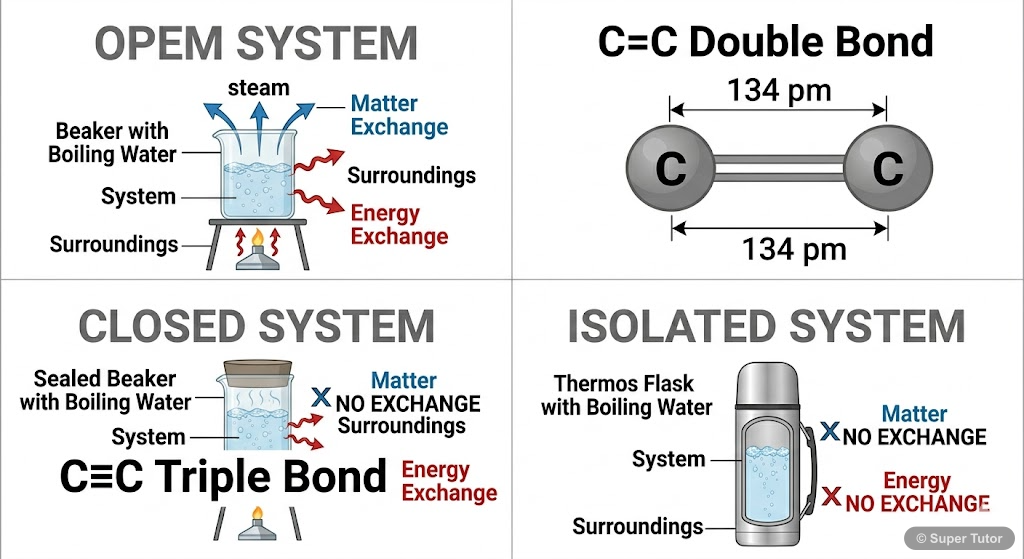
Super Tutor has 5+ illustrations like this for Thermodynamics alone — flashcards, concept maps, and step-by-step visuals.
See them allHow to Study Thermodynamics
A structured approach to studying Thermodynamics for GUJCET Chemistry.
Study Plan for Thermodynamics
Day 1–2: Learn the Theory
Study the chapter thoroughly. Note down definitions, formulas, and key concepts.
Day 3: Practice Problems
Solve practice questions and previous year GUJCET problems. There are 269 questions available for this chapter.
Day 4: Revise & Test
Revise key formulas and concepts without looking at notes. Take a practice quiz to test your understanding.
What to Focus On
- System, surroundings, and boundary are fundamental concepts
- Three types of systems: open, closed, and isolated
- State functions depend only on current state, not path
- First Law: ΔU = q + w (conservation of energy)
- Sign convention determines positive/negative values
- Work calculation depends on process type and conditions
- Enthalpy H = U + PV, represents heat content at constant pressure
- ΔH = ΔU + ΔngRT relates enthalpy and internal energy changes
- Calorimetry measures heat changes in chemical reactions
Common Mistakes to Avoid
ΔH and ΔU are always equal for all chemical reactions
Spontaneous processes always have ΔH < 0 (exothermic)
Higher entropy always means more disorder
Want a personalised study plan?
Super Tutor creates a day-by-day plan for GUJCET Chemistry that adapts to your exam date and pace.
Create My Study Plan — FreeFrequently Asked Questions
What topics are covered in Thermodynamics for GUJCET?
How important is Thermodynamics for GUJCET?
How to prepare Thermodynamics for GUJCET?
More resources for Thermodynamics
For GUJCET aspirants
Get the full Thermodynamics chapter — for free.
Practice questions, revision notes, formula sheet and AI doubt-solver for GUJCET Chemistry.