System of Particles and Rotational Motion — Study Plan
TG EAPCET · Physics
Step-by-step study plan for System of Particles and Rotational Motion — structured approach to mastering this chapter for TG EAPCET Physics.
Interactive on Super Tutor
Studying System of Particles and Rotational Motion? Get the full chapter — free.
Practice questions, revision notes, formula sheet and AI doubt-solver — built for TG EAPCET Physics.
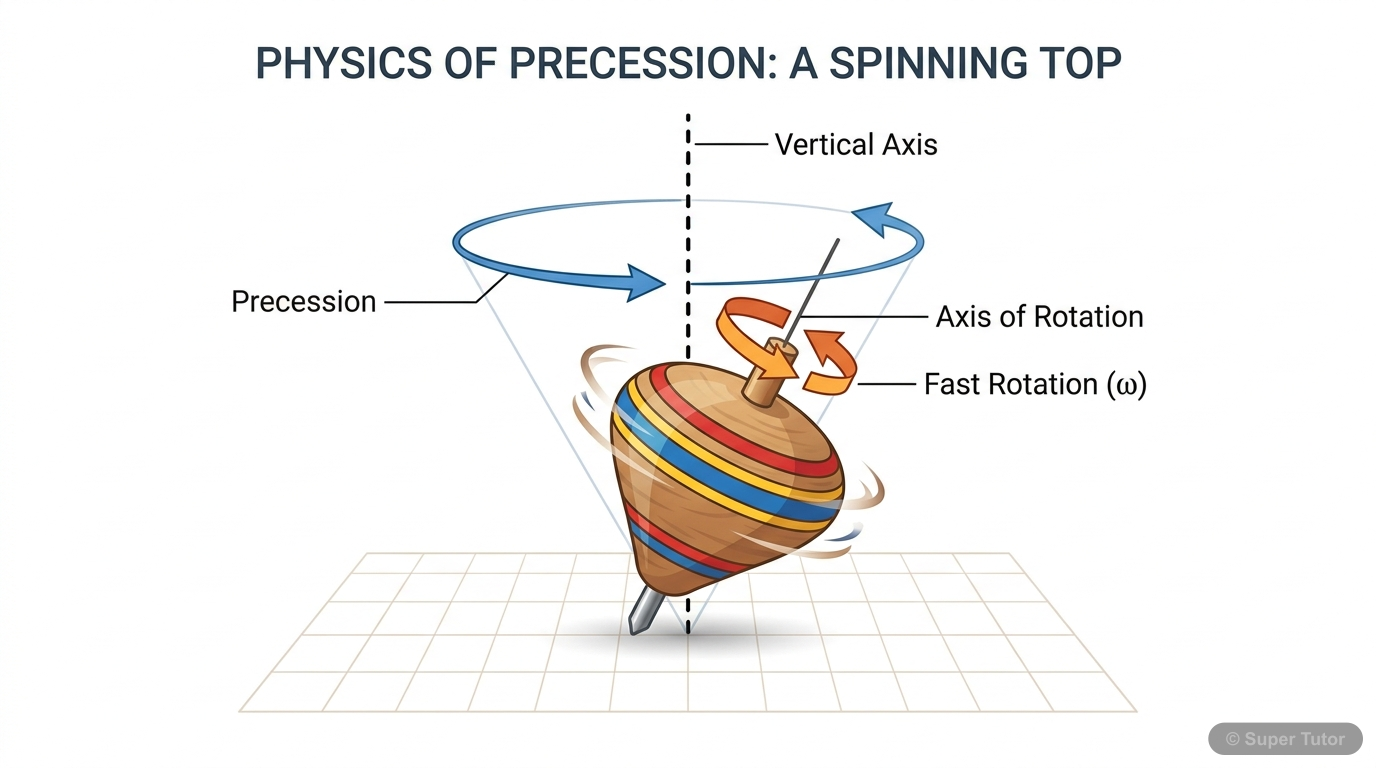
Super Tutor has 15+ illustrations like this for System of Particles and Rotational Motion alone — flashcards, concept maps, and step-by-step visuals.
See them allHow to Study System of Particles and Rotational Motion
A structured approach to studying System of Particles and Rotational Motion for TG EAPCET Physics.
Study Plan for System of Particles and Rotational Motion
Day 1–2: Learn the Theory
Study the chapter thoroughly. Note down definitions, formulas, and key concepts.
Day 3: Practice Problems
Solve practice questions and previous year TG EAPCET problems. There are 213 questions available for this chapter.
Day 4: Revise & Test
Revise key formulas and concepts without looking at notes. Take a practice quiz to test your understanding.
What to Focus On
- Rigid body: distances between particles remain constant
- Pure translation: all particles have same velocity
- Pure rotation: particles move in circles about fixed axis
- CM is the point where total mass appears to be concentrated
- For two particles: x_CM = m₂d/(m₁ + m₂)
- For n particles: R_CM = Σ(m_i × r_i)/M
- CM obeys Newton's laws: MA_CM = F_ext
- Internal forces don't affect CM motion
- If F_ext = 0, CM moves with constant velocity
Common Mistakes to Avoid
Moment of inertia depends only on mass, just like in linear motion where F = ma
In rolling motion, all points on the object have the same velocity
Centre of mass is always at the geometrical center of an object
Want a personalised study plan?
Super Tutor creates a day-by-day plan for TG EAPCET Physics that adapts to your exam date and pace.
Create My Study Plan — FreeFrequently Asked Questions
What topics are covered in System of Particles and Rotational Motion for TG EAPCET?
How important is System of Particles and Rotational Motion for TG EAPCET?
How to prepare System of Particles and Rotational Motion for TG EAPCET?
More resources for System of Particles and Rotational Motion
Syllabus
System of Particles and Rotational Motion — syllabus
Revision Notes
System of Particles and Rotational Motion — revision notes
Important Topics
System of Particles and Rotational Motion — important topics
Practice Questions
System of Particles and Rotational Motion — practice questions
Formula Sheet
System of Particles and Rotational Motion — formula sheet
For TG EAPCET aspirants
Get the full System of Particles and Rotational Motion chapter — for free.
Practice questions, revision notes, formula sheet and AI doubt-solver for TG EAPCET Physics.