Mechanical Properties of Fluids — Study Plan
VITEEE · Physics
Step-by-step study plan for Mechanical Properties of Fluids — structured approach to mastering this chapter for VITEEE Physics.
Interactive on Super Tutor
Studying Mechanical Properties of Fluids? Get the full chapter — free.
Practice questions, revision notes, formula sheet and AI doubt-solver — built for VITEEE Physics.
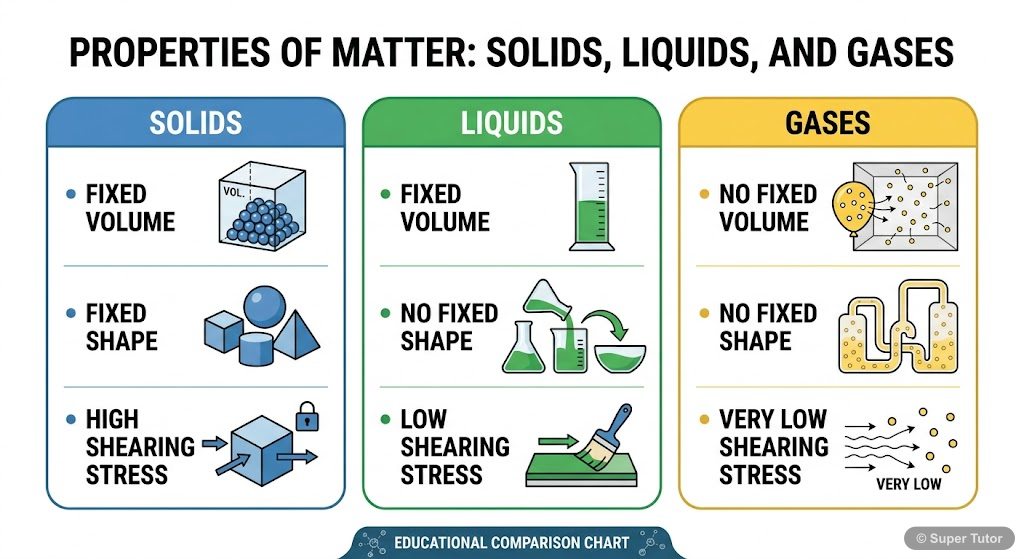
This is just one of 23+ visuals inside Super Tutor's Mechanical Properties of Fluids chapter
Explore the full setHow to Study Mechanical Properties of Fluids
A structured approach to studying Mechanical Properties of Fluids for VITEEE Physics.
Study Plan for Mechanical Properties of Fluids
Day 1–2: Learn the Theory
Study the chapter thoroughly. Note down definitions, formulas, and key concepts.
Day 3: Practice Problems
Solve practice questions and previous year VITEEE problems. There are 213 questions available for this chapter.
Day 4: Revise & Test
Revise key formulas and concepts without looking at notes. Take a practice quiz to test your understanding.
What to Focus On
- Pressure P = F/A with SI unit pascal (Pa)
- Pascal's law: Pressure in enclosed fluid transmits equally in all directions
- Hydrostatic pressure: P = P₀ + ρgh
- Buoyant force Fb = Weight of displaced fluid = ViρLg
- For floating: Buoyant force = Weight of object
- Object floats if ρobject < ρfluid
- Streamlines show fluid particle paths in steady flow
- Laminar flow: smooth layers without mixing
- Turbulent flow: irregular motion above critical velocity
Common Mistakes to Avoid
Pressure at a point in a fluid depends on the shape and size of the container
In Bernoulli's equation, higher velocity always means lower pressure
Buoyant force depends on the weight or density of the object
Want a personalised study plan?
Super Tutor creates a day-by-day plan for VITEEE Physics that adapts to your exam date and pace.
Create My Study Plan — FreeFrequently Asked Questions
What topics are covered in Mechanical Properties of Fluids for VITEEE?
How important is Mechanical Properties of Fluids for VITEEE?
How to prepare Mechanical Properties of Fluids for VITEEE?
More resources for Mechanical Properties of Fluids
Syllabus
Mechanical Properties of Fluids — syllabus
Revision Notes
Mechanical Properties of Fluids — revision notes
Important Topics
Mechanical Properties of Fluids — important topics
Practice Questions
Mechanical Properties of Fluids — practice questions
Formula Sheet
Mechanical Properties of Fluids — formula sheet
For VITEEE aspirants
Get the full Mechanical Properties of Fluids chapter — for free.
Practice questions, revision notes, formula sheet and AI doubt-solver for VITEEE Physics.