Mineral and Energy Resources I
ICSE · Class 10 · Geography
Summary of Mineral and Energy Resources I for ICSE Class 10 Geography. Key concepts, important points, and chapter overview.
Interactive on Super Tutor
Studying Mineral and Energy Resources I? Get the full interactive chapter.
Quizzes, flashcards, AI doubt-solver and a step-by-step study plan — built for chapter summary and more.
1,000+ Class 10 students started this chapter today
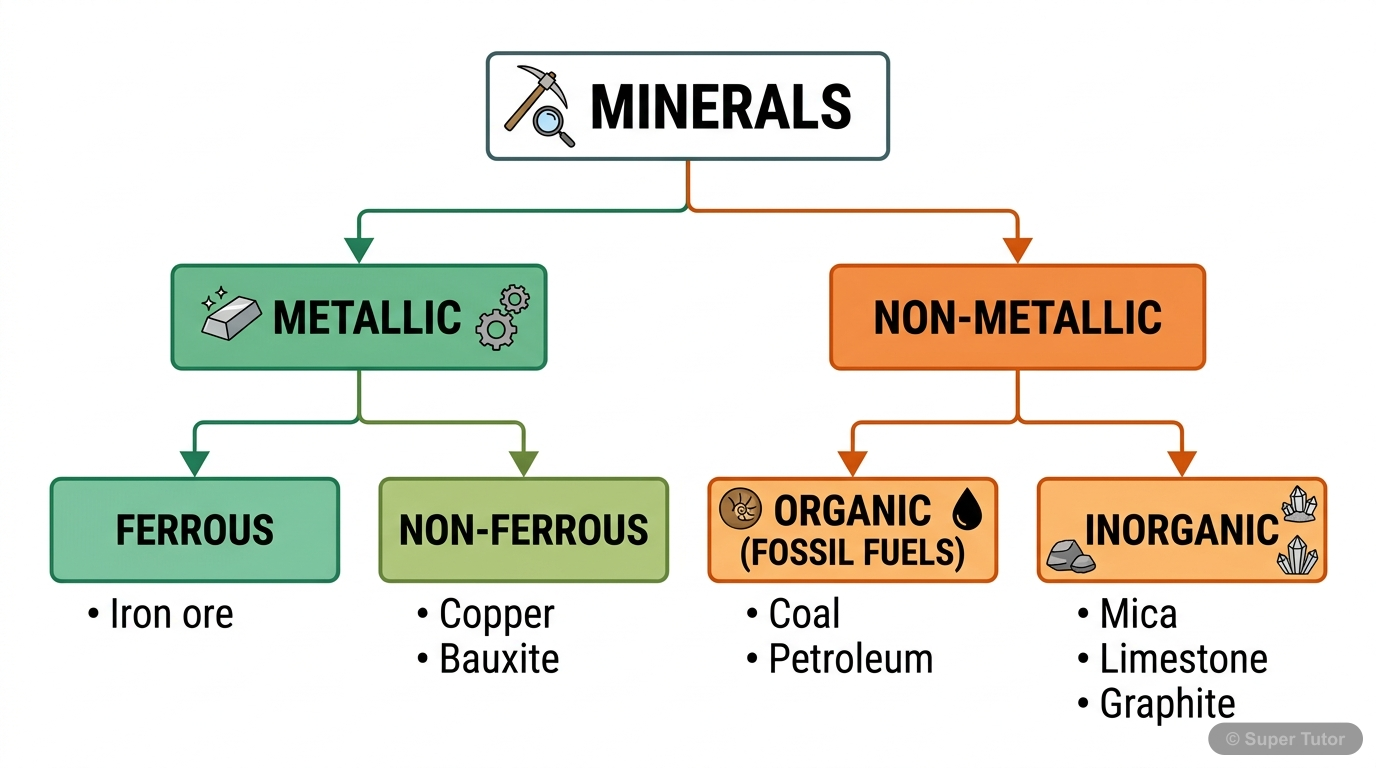
This is just one of 9+ visuals inside Super Tutor's Mineral and Energy Resources I chapter
Explore the full setOverview
This chapter explores the fundamental concepts of mineral resources in India, focusing on the distribution, characteristics, and uses of four major metallic minerals: Iron Ore, Manganese, Bauxite, and Copper. Minerals are naturally occurring aggregates of elements with definite chemical compositions
Key Concepts
A mineral is an aggregate
A mineral is an aggregate of two or more elements with definite chemical composition formed by inorganic processes. Minerals are classified into two m
Iron ore exists in four varieties
Iron ore exists in four varieties based on iron content: Magnetite (72% iron, best quality, magnetic properties), Haematite (60-70% iron, most common)
Manganese is essential for steel production
Manganese is essential for steel production, requiring 6-9 kg per tonne of steel. It removes impurities, prevents rusting, reduces brittleness, and im
Bauxite is the primary ore
Bauxite is the primary ore for aluminum production, consisting of hydrated aluminum oxides. India is the third largest producer globally. Aluminum is
Copper is highly ductile with excellent
Copper is highly ductile with excellent thermal and electrical conductivity. It's used in electrical machinery, automobiles, telecommunications, and f
Learning Objectives
- Understand the definition and classification of minerals into metallic and non-metallic categories
- Learn about the four main types of iron ore and their quality differences
- Identify the major producing states and mining centers for iron ore, manganese, bauxite, and copper in India
- Analyze the industrial uses and economic importance of these minerals
- Recognize the need for conservation of mineral resources as they are non-renewable
Frequently Asked Questions
What are the important topics in Mineral and Energy Resources I for ICSE Class 10 Geography?
How to score full marks in Mineral and Energy Resources I — ICSE Class 10 Geography?
Sources & Official References
Content is aligned to the official syllabus. Refer to the board website for the latest curriculum.
More resources for Mineral and Energy Resources I
Important Questions
Practice with board exam-style questions
Syllabus
What topics to cover
Revision Notes
Key points for last-minute revision
Study Plan
Step-by-step plan to ace this chapter
Flashcards
Quick-fire cards for active recall
Formula Sheet
All formulas in one place
Practice Quiz
Test yourself with a quick quiz
Concept Maps
See how topics connect visually
For serious students
Get the full Mineral and Energy Resources I chapter — for free.
Quizzes, flashcards, AI doubt-solver and a step-by-step study plan for ICSE Class 10 Geography.