The Respiratory System
ICSE · Class 9 · Biology
Summary of The Respiratory System for ICSE Class 9 Biology. Key concepts, important points, and chapter overview.
Interactive on Super Tutor
Studying The Respiratory System? Get the full interactive chapter.
Quizzes, flashcards, AI doubt-solver and a step-by-step study plan — built for chapter summary and more.
1,000+ Class 9 students started this chapter today
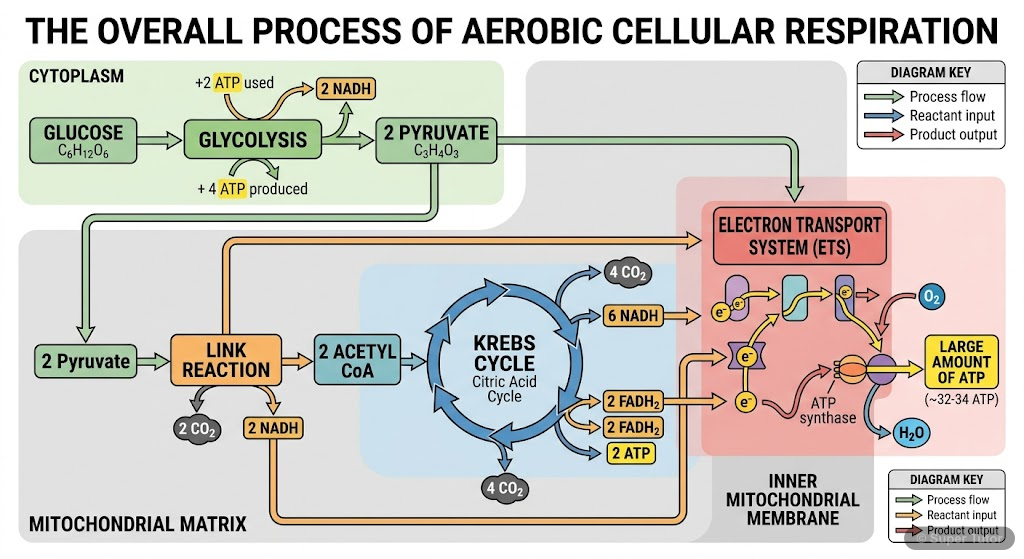
Super Tutor has 10+ illustrations like this for The Respiratory System alone — flashcards, concept maps, and step-by-step visuals.
See them allOverview
The respiratory system is one of the most vital systems in our body, responsible for the continuous process of breathing and cellular respiration. This chapter explores how living organisms, especially humans, obtain oxygen from the environment and use it to release energy from food molecules like g
Key Concepts
The chemical process of releasing energy
The chemical process of releasing energy by breaking down glucose using oxygen. The overall equation is: C₆H₁₂O₆ + 6O₂ → 6CO₂ + 6H₂O + Energy (38 ATP)
Aerobic respiration uses oxygen and produces
Aerobic respiration uses oxygen and produces CO₂, water, and maximum energy (38 ATP per glucose). Anaerobic respiration occurs without oxygen - in pla
Consists of air passages (nose
Consists of air passages (nose, pharynx, larynx, trachea, bronchi, bronchioles) leading to lungs with approximately 700 million alveoli. Each part has
Involves inspiration (inhalation) and expiration (exhalat...
Involves inspiration (inhalation) and expiration (exhalation) controlled by diaphragm and intercostal muscles. During inspiration, diaphragm flattens,
Oxygen is carried by RBCs as
Oxygen is carried by RBCs as oxyhemoglobin through arteries. CO₂ is transported in two forms: as bicarbonates in plasma and as carbamino-hemoglobin in
Learning Objectives
- Understand the definition and importance of respiration as an energy-releasing process
- Distinguish between aerobic and anaerobic respiration in plants and animals
- Learn the structure and functions of the human respiratory system organs
- Explain the mechanism of breathing including role of diaphragm and intercostal muscles
- Understand gaseous transport and tissue respiration processes
Frequently Asked Questions
What are the important topics in The Respiratory System for ICSE Class 9 Biology?
How to score full marks in The Respiratory System — ICSE Class 9 Biology?
Sources & Official References
Content is aligned to the official syllabus. Refer to the board website for the latest curriculum.
More resources for The Respiratory System
Important Questions
Practice with board exam-style questions
Syllabus
What topics to cover
Revision Notes
Key points for last-minute revision
Study Plan
Step-by-step plan to ace this chapter
Flashcards
Quick-fire cards for active recall
Formula Sheet
All formulas in one place
Practice Quiz
Test yourself with a quick quiz
Concept Maps
See how topics connect visually
For serious students
Get the full The Respiratory System chapter — for free.
Quizzes, flashcards, AI doubt-solver and a step-by-step study plan for ICSE Class 9 Biology.