Political Parties
Madhya Pradesh Board · Class 10 · Social Science
Summary of Political Parties for Madhya Pradesh Board Class 10 Social Science. Key concepts, important points, and chapter overview.
Interactive on Super Tutor
Studying Political Parties? Get the full interactive chapter.
Quizzes, flashcards, AI doubt-solver and a step-by-step study plan — built for chapter summary and more.
1,000+ Class 10 students started this chapter today
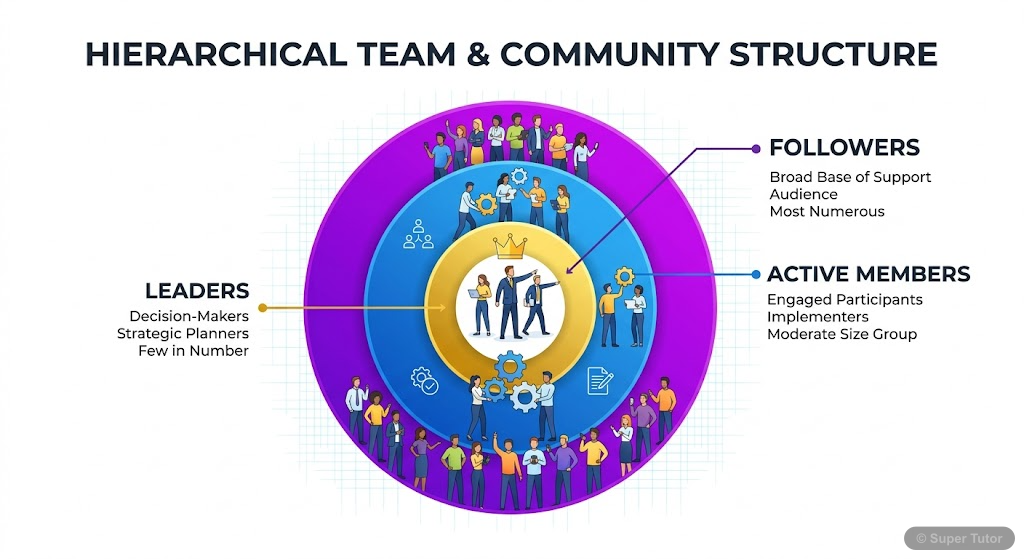
Learn better with visuals Super Tutor has hundreds of illustrations like this across every chapter — all free to try.
Get startedOverview
Political parties are the most visible institutions in a democracy and serve as the primary link between citizens and government. This chapter explores why political parties are essential for democracy, their functions, different party systems, and the challenges they face. We'll examine India's nat
Key Concepts
A political party is a group
A political party is a group of people who come together to contest elections and hold power in government. They agree on policies and programs for so
Seven key functions
Seven key functions: 1) Contest elections by selecting candidates, 2) Present different policies for voters to choose from, 3) Make laws through party
One
One-party system (only one party allowed - not democratic), Two-party system (power alternates between two main parties like USA, UK), Multi-party sys
National parties have presence across multiple
National parties have presence across multiple states and follow unified policies (must secure 6% votes in Lok Sabha or 4 states' assembly elections a
Six recognized national parties
Six recognized national parties: All India Trinamool Congress (AITC), Bahujan Samaj Party (BSP), Bharatiya Janata Party (BJP), Communist Party of Indi
Learning Objectives
- Understand the meaning, functions, and necessity of political parties in a democracy
- Analyze different types of party systems (one-party, two-party, and multi-party systems)
- Identify and describe India's major national and regional political parties
- Examine the challenges facing political parties in modern democracies
- Evaluate various reforms suggested to improve the functioning of political parties
Frequently Asked Questions
What are the important topics in Political Parties for Madhya Pradesh Board Class 10 Social Science?
How to score full marks in Political Parties — Madhya Pradesh Board Class 10 Social Science?
Sources & Official References
Content is aligned to the official syllabus. Refer to the board website for the latest curriculum.
More resources for Political Parties
Important Questions
Practice with board exam-style questions
Syllabus
What topics to cover
Revision Notes
Key points for last-minute revision
Study Plan
Step-by-step plan to ace this chapter
Flashcards
Quick-fire cards for active recall
Formula Sheet
All formulas in one place
Practice Quiz
Test yourself with a quick quiz
Concept Maps
See how topics connect visually
For serious students
Get the full Political Parties chapter — for free.
Quizzes, flashcards, AI doubt-solver and a step-by-step study plan for Madhya Pradesh Board Class 10 Social Science.