Power-sharing & Federalism
Madhya Pradesh Board · Class 10 · Social Science
Quick revision notes for Power-sharing & Federalism — Madhya Pradesh Board Class 10 Social Science. Key concepts, formulas, and definitions for last-minute revision.
Interactive on Super Tutor
Studying Power-sharing & Federalism? Get the full interactive chapter.
Quizzes, flashcards, AI doubt-solver and a step-by-step study plan — built for revision notes and more.
1,000+ Class 10 students started this chapter today
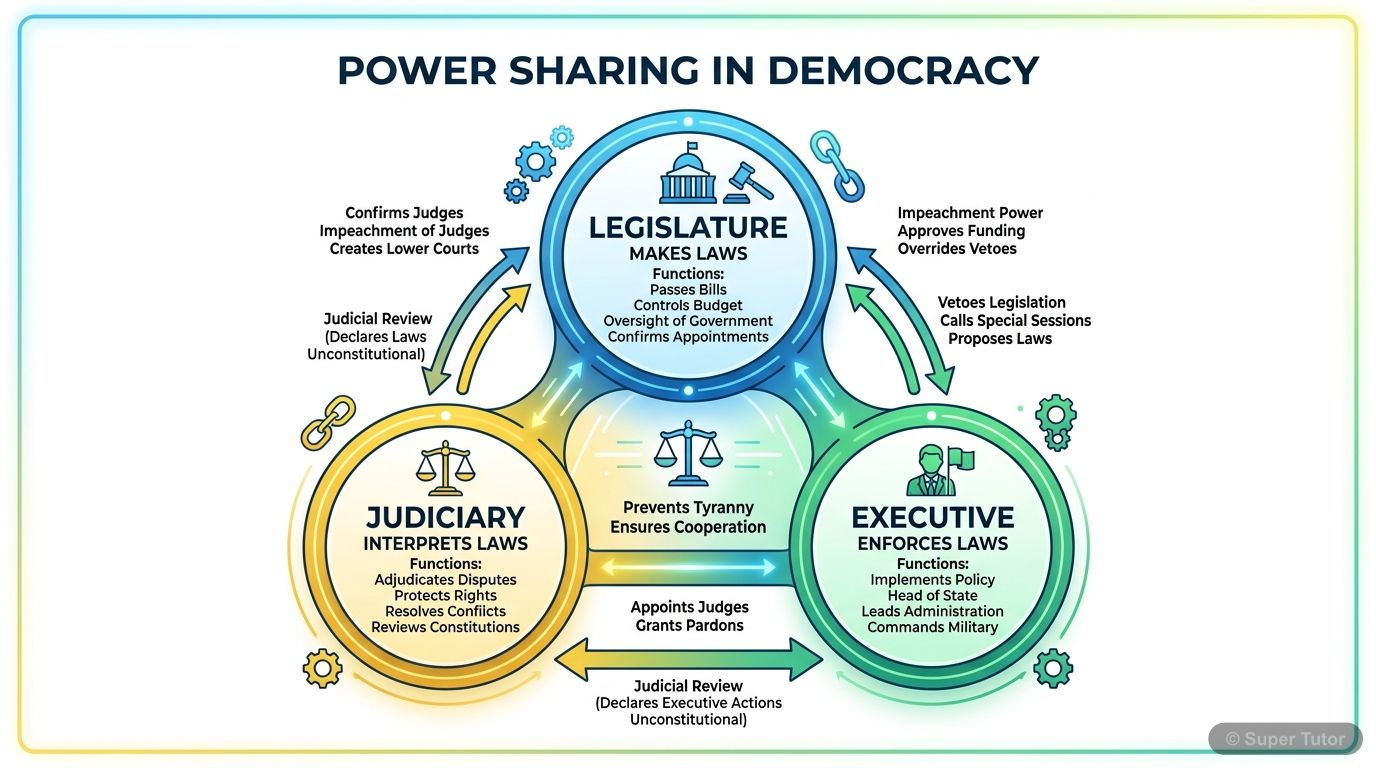
Learn better with visuals Super Tutor has hundreds of illustrations like this across every chapter — all free to try.
Get startedKey Topics to Revise
Belgium vs Sri Lanka: Two Different Approaches
- Belgium: Small European country with complex ethnic composition - 59% Dutch-speaking (Flemish), 40% French-speaking (Wallonian), 1% German-speaking
- Brussels (capital): 80% French-speaking, 20% Dutch-speaking population
- Initial tensions arose because French-speaking minority was economically powerful, causing resentment among Dutch majority
Majoritarianism in Sri Lanka - A Case Study of Failed Democracy
- 1948: Sri Lanka gained independence, Sinhala leaders sought dominance through democratic majority
- 1956: Sinhala-Only Act passed - Tamil language lost official status, only Sinhala recognized
- Preferential policies favored Sinhala applicants in universities and government jobs
Accommodation in Belgium - A Success Story
- 1970-1993: Constitution amended four times to create innovative power-sharing arrangement
- Equal representation: Dutch and French-speaking ministers equal in central government
- Special laws require majority support from each linguistic group - prevents unilateral decisions
Why Power-sharing is Desirable - Prudential and Moral Reasons
- Prudential reasons (practical benefits): Reduces possibility of conflict between social groups
- Prevents violence and political instability by addressing different group concerns
- Tyranny of majority ultimately harms majority itself - short-term gains, long-term losses
Get complete notes with diagrams and examples
Full NotesKey Concepts
Frequently Asked Questions
What are the important topics in Power-sharing & Federalism for Madhya Pradesh Board Class 10 Social Science?
How to score full marks in Power-sharing & Federalism — Madhya Pradesh Board Class 10 Social Science?
Sources & Official References
Content is aligned to the official syllabus. Refer to the board website for the latest curriculum.
More resources for Power-sharing & Federalism
Important Questions
Practice with board exam-style questions
Syllabus
What topics to cover
Study Plan
Step-by-step plan to ace this chapter
Flashcards
Quick-fire cards for active recall
Formula Sheet
All formulas in one place
Chapter Summary
Understand the chapter at a glance
Practice Quiz
Test yourself with a quick quiz
Concept Maps
See how topics connect visually
For serious students
Get the full Power-sharing & Federalism chapter — for free.
Quizzes, flashcards, AI doubt-solver and a step-by-step study plan for Madhya Pradesh Board Class 10 Social Science.