Mineral and Energy Resources
Madhya Pradesh Board · Class 12 · Geography
Quick revision notes for Mineral and Energy Resources — Madhya Pradesh Board Class 12 Geography. Key concepts, formulas, and definitions for last-minute revision.
Interactive on Super Tutor
Studying Mineral and Energy Resources? Get the full interactive chapter.
Quizzes, flashcards, AI doubt-solver and a step-by-step study plan — built for revision notes and more.
1,000+ Class 12 students started this chapter today
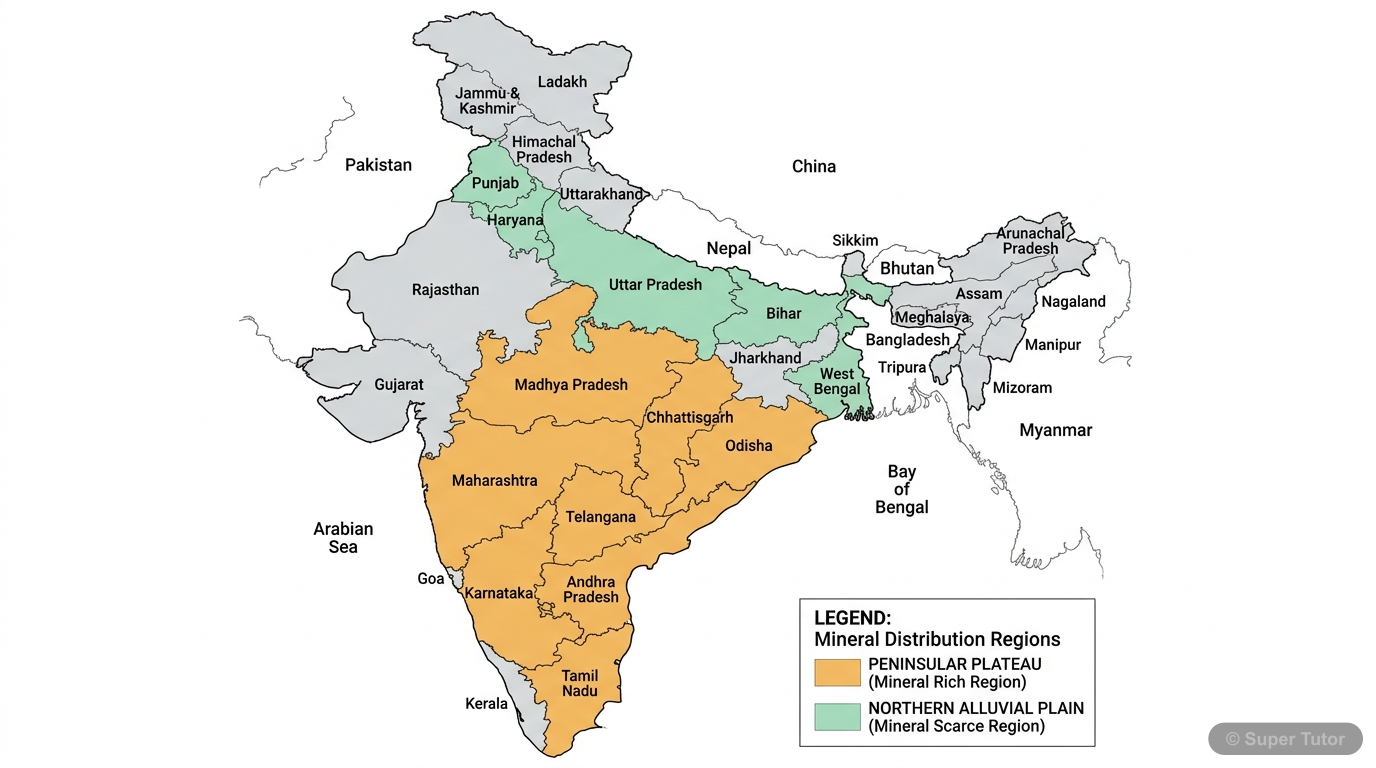
Super Tutor has 17+ illustrations like this for Mineral and Energy Resources alone — flashcards, concept maps, and step-by-step visuals.
See them allKey Topics to Revise
Classification and Characteristics of Minerals
- Minerals are natural substances with definite chemical and physical properties, classified into metallic and non-metallic categories
- Metallic minerals are further divided into ferrous (iron-containing) and non-ferrous (without iron)
- Non-metallic minerals include organic (fossil fuels) and inorganic (mica, limestone) types
Mineral Belts of India
- North-Eastern Belt: Chhotanagpur, Odisha Plateau, West Bengal, parts of Chhattisgarh - rich in iron ore, coal, manganese, bauxite, mica
- South-Western Belt: Karnataka, Goa, Tamil Nadu uplands, Kerala - rich in ferrous metals, bauxite, high-grade iron ore, lacks coal except Neyveli lignite
- North-Western Belt: Aravali in Rajasthan and Gujarat - copper, zinc, building stones, petroleum deposits, salt
Iron Ore Distribution
- India has largest iron ore reserves in Asia with two main types: haematite and magnetite
- 95% of reserves in Odisha, Jharkhand, Chhattisgarh, Karnataka, Goa, Telangana, Andhra Pradesh, Tamil Nadu
- Odisha: Sundergarh, Mayurbhanj, Jhar districts - mines like Gurumahisani, Sulaipet, Badampahar
Other Metallic Minerals
- Manganese: Used in iron smelting and ferro-alloys, mainly in Dharwar system rocks
- Leading producers: Madhya Pradesh (Balaghat-Chhindwara belt), Odisha (Bonai, Kendujhar)
- Bauxite: Ore for aluminum production, Odisha largest producer (Kalahandi, Sambalpur)
Get complete notes with diagrams and examples
Full NotesKey Concepts
Frequently Asked Questions
What are the important topics in Mineral and Energy Resources for Madhya Pradesh Board Class 12 Geography?
How to score full marks in Mineral and Energy Resources — Madhya Pradesh Board Class 12 Geography?
Sources & Official References
Content is aligned to the official syllabus. Refer to the board website for the latest curriculum.
More resources for Mineral and Energy Resources
Important Questions
Practice with board exam-style questions
Syllabus
What topics to cover
Study Plan
Step-by-step plan to ace this chapter
Flashcards
Quick-fire cards for active recall
Formula Sheet
All formulas in one place
Chapter Summary
Understand the chapter at a glance
Practice Quiz
Test yourself with a quick quiz
Concept Maps
See how topics connect visually
For serious students
Get the full Mineral and Energy Resources chapter — for free.
Quizzes, flashcards, AI doubt-solver and a step-by-step study plan for Madhya Pradesh Board Class 12 Geography.