The End of Bipolarity
Madhya Pradesh Board · Class 12 · Political Science
Summary of The End of Bipolarity for Madhya Pradesh Board Class 12 Political Science. Key concepts, important points, and chapter overview.
Interactive on Super Tutor
Studying The End of Bipolarity? Get the full interactive chapter.
Quizzes, flashcards, AI doubt-solver and a step-by-step study plan — built for chapter summary and more.
1,000+ Class 12 students started this chapter today
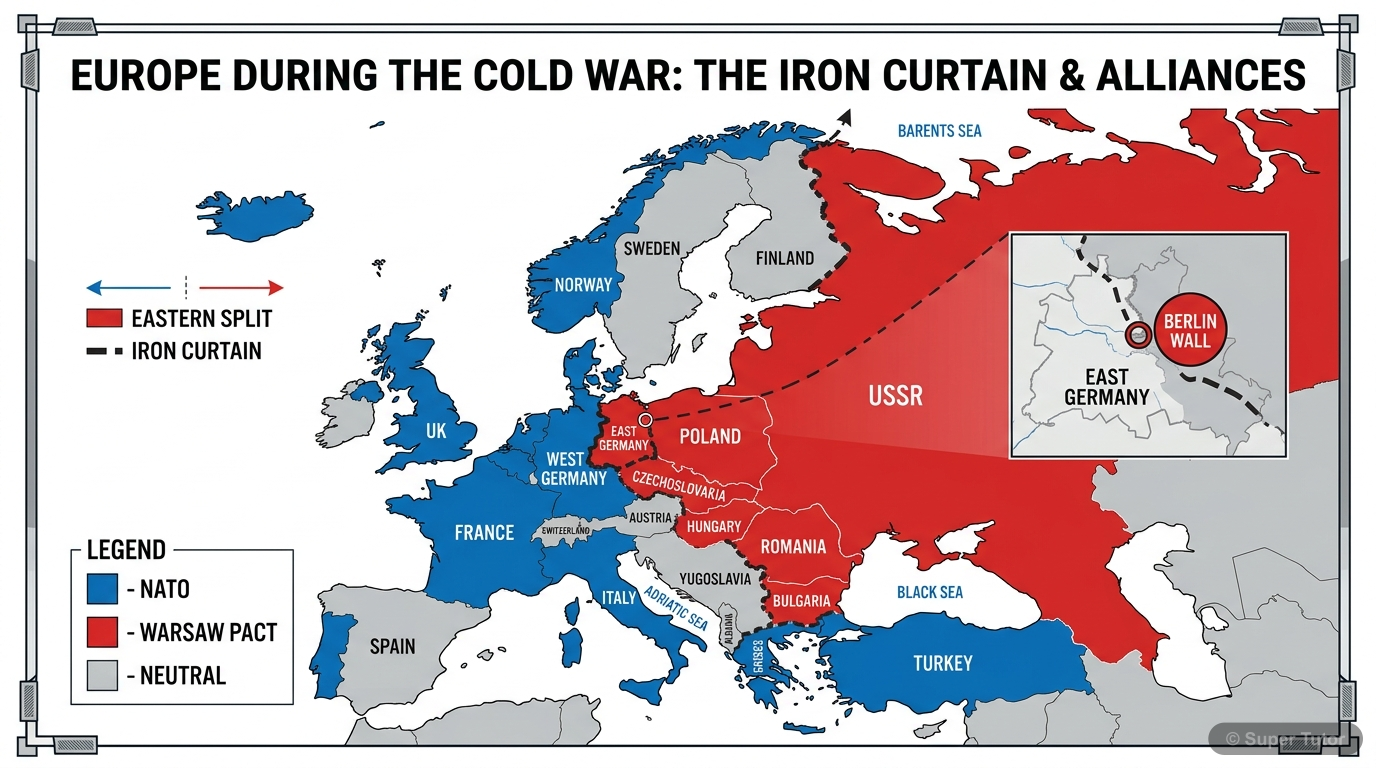
This is just one of 7+ visuals inside Super Tutor's The End of Bipolarity chapter
Explore the full setOverview
The End of Bipolarity marks one of the most significant events in modern world history. This chapter explores the dramatic collapse of the Soviet Union and the socialist bloc, which ended the Cold War era of bipolar world order. The fall of the Berlin Wall in 1989 symbolized the beginning of this tr
Key Concepts
The Union of Soviet Socialist Republics
The Union of Soviet Socialist Republics was formed after the 1917 Russian Revolution, based on socialist principles opposing capitalism. It featured a
The group of East European countries
The group of East European countries liberated by the Soviet army during World War II, which adopted political and economic systems modeled after the
Mikhail Gorbachev introduced policies of Perestroika
Mikhail Gorbachev introduced policies of Perestroika (restructuring) and Glasnost (openness) in 1985 to reform the Soviet system. These reforms aimed
The rapid transition model from socialism
The rapid transition model from socialism to capitalism implemented in post-Soviet states, influenced by the World Bank and IMF. It involved immediate
An organization formed in December 1991
An organization formed in December 1991 by Russia, Ukraine, and Belarus after declaring the Soviet Union dissolved. Other former Soviet republics late
Learning Objectives
- Understand the causes and consequences of the Soviet Union's disintegration
- Analyze the impact of the end of bipolarity on world politics
- Examine the process of transition from socialism to capitalism in post-Soviet states
- Evaluate the concept of 'shock therapy' and its effects on former communist countries
- Assess India's relationship with Russia and other post-Soviet states
Frequently Asked Questions
What are the important topics in The End of Bipolarity for Madhya Pradesh Board Class 12 Political Science?
How to score full marks in The End of Bipolarity — Madhya Pradesh Board Class 12 Political Science?
Sources & Official References
Content is aligned to the official syllabus. Refer to the board website for the latest curriculum.
More resources for The End of Bipolarity
Important Questions
Practice with board exam-style questions
Syllabus
What topics to cover
Revision Notes
Key points for last-minute revision
Study Plan
Step-by-step plan to ace this chapter
Flashcards
Quick-fire cards for active recall
Formula Sheet
All formulas in one place
Practice Quiz
Test yourself with a quick quiz
Concept Maps
See how topics connect visually
For serious students
Get the full The End of Bipolarity chapter — for free.
Quizzes, flashcards, AI doubt-solver and a step-by-step study plan for Madhya Pradesh Board Class 12 Political Science.