Cultural Change
Madhya Pradesh Board · Class 12 · Sociology
Summary of Cultural Change for Madhya Pradesh Board Class 12 Sociology. Key concepts, important points, and chapter overview.
Interactive on Super Tutor
Studying Cultural Change? Get the full interactive chapter.
Quizzes, flashcards, AI doubt-solver and a step-by-step study plan — built for chapter summary and more.
1,000+ Class 12 students started this chapter today
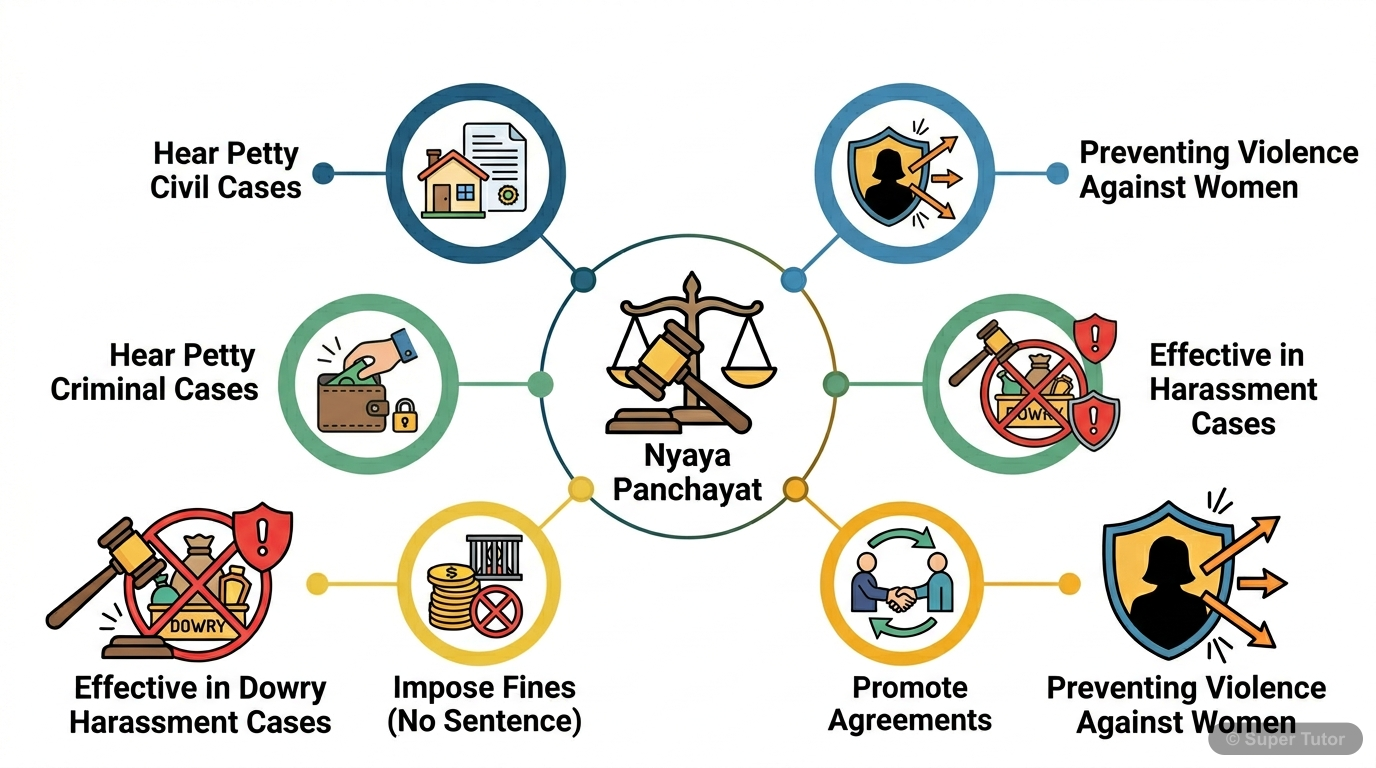
Super Tutor has 5+ illustrations like this for Cultural Change alone — flashcards, concept maps, and step-by-step visuals.
See them allOverview
Cultural change refers to the transformation in ways of life, norms, values, fashions, and social practices that occur alongside structural changes in society. In colonial India, cultural changes emerged as complex responses to British rule, involving both deliberate social reform movements and grad
Key Concepts
19th century movements led by reformers
19th century movements led by reformers like Raja Ram Mohun Roy, Pandita Ramabai, and Sir Syed Ahmed Khan that challenged social evils like sati, chil
A process coined by M
A process coined by M.N. Srinivas where lower castes adopt customs, rituals, beliefs, and lifestyle of higher 'twice-born' castes to improve their soc
Changes in Indian society and culture
Changes in Indian society and culture resulting from 150+ years of British rule, including adoption of Western technology, institutions, ideology, val
A broader process involving shift from
A broader process involving shift from local to universal perspectives, emphasis on individual choice over birth-based roles, scientific attitude, and
In the Indian context
In the Indian context, it doesn't mean decline of religion but rather the changing role of religious practices and institutions. Caste, for example, b
Learning Objectives
- Understand the relationship between structural and cultural changes in colonial India
- Analyze the role of 19th century social reform movements in bringing cultural transformation
- Examine the four key processes of cultural change: sanskritisation, modernisation, secularisation, and westernisation
- Evaluate the impact of these processes on different sections of Indian society
- Understand how traditional and modern elements coexist in contemporary Indian culture
Frequently Asked Questions
What are the important topics in Cultural Change for Madhya Pradesh Board Class 12 Sociology?
How to score full marks in Cultural Change — Madhya Pradesh Board Class 12 Sociology?
Sources & Official References
Content is aligned to the official syllabus. Refer to the board website for the latest curriculum.
More resources for Cultural Change
Important Questions
Practice with board exam-style questions
Syllabus
What topics to cover
Revision Notes
Key points for last-minute revision
Study Plan
Step-by-step plan to ace this chapter
Flashcards
Quick-fire cards for active recall
Formula Sheet
All formulas in one place
Practice Quiz
Test yourself with a quick quiz
Concept Maps
See how topics connect visually
For serious students
Get the full Cultural Change chapter — for free.
Quizzes, flashcards, AI doubt-solver and a step-by-step study plan for Madhya Pradesh Board Class 12 Sociology.