Cultural Change
Madhya Pradesh Board · Class 12 · Sociology
Quick revision notes for Cultural Change — Madhya Pradesh Board Class 12 Sociology. Key concepts, formulas, and definitions for last-minute revision.
Interactive on Super Tutor
Studying Cultural Change? Get the full interactive chapter.
Quizzes, flashcards, AI doubt-solver and a step-by-step study plan — built for revision notes and more.
1,000+ Class 12 students started this chapter today
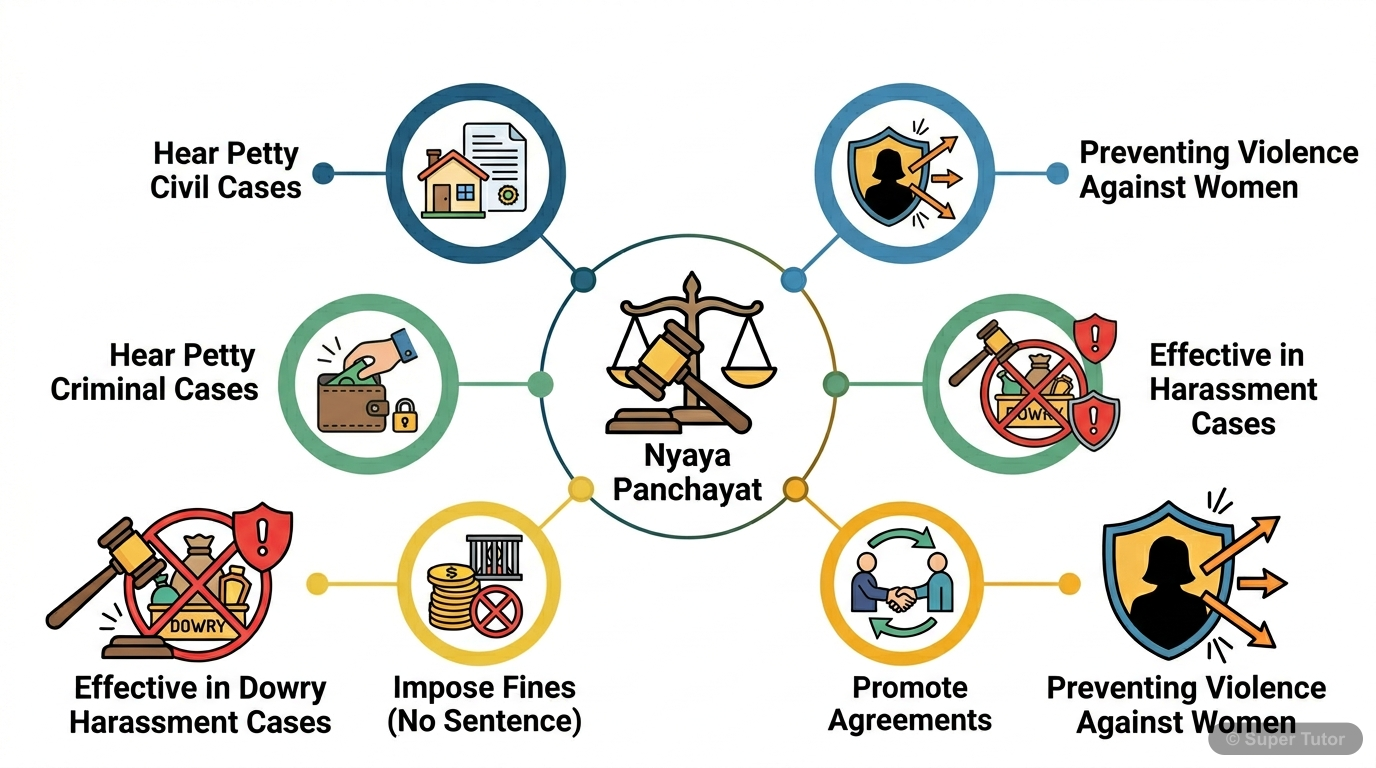
Super Tutor has 5+ illustrations like this for Cultural Change alone — flashcards, concept maps, and step-by-step visuals.
See them allKey Topics to Revise
Social Reform Movements in 19th Century India
- Emerged as responses to social evils like sati, child marriage, ban on widow remarriage, and caste discrimination
- Combined modern Western liberal ideas with reinterpretation of traditional Hindu scriptures
- Key reformers: Raja Ram Mohun Roy, Pandita Ramabai, Sir Syed Ahmed Khan, Jotiba Phule, Ishwar Chandra Vidyasagar
Sanskritisation
- Term coined by M.N. Srinivas - process by which 'low' caste adopts customs, rituals, beliefs of 'twice-born' castes
- Influences language, literature, ideology, music, dance, drama, style of life, and ritual
- Operates differently in different regions - dominant caste influence varies
Westernisation
- Defined by M.N. Srinivas as changes in Indian society due to 150+ years of British rule
- Includes changes in technology, institutions, ideology, and values
- Two types: subcultural pattern among educated minority, and general spread of Western cultural traits
Modernisation and Secularisation
- Modernisation involves transition from local/parochial to universal/cosmopolitan perspectives
- Key features: individual as primary unit, choice-based associations, achievement-based identity, scientific attitude
- In India, modernisation occurred within colonial context, making it distinct from Western experience
Get complete notes with diagrams and examples
Full NotesKey Concepts
Frequently Asked Questions
What are the important topics in Cultural Change for Madhya Pradesh Board Class 12 Sociology?
How to score full marks in Cultural Change — Madhya Pradesh Board Class 12 Sociology?
Sources & Official References
Content is aligned to the official syllabus. Refer to the board website for the latest curriculum.
More resources for Cultural Change
Important Questions
Practice with board exam-style questions
Syllabus
What topics to cover
Study Plan
Step-by-step plan to ace this chapter
Flashcards
Quick-fire cards for active recall
Formula Sheet
All formulas in one place
Chapter Summary
Understand the chapter at a glance
Practice Quiz
Test yourself with a quick quiz
Concept Maps
See how topics connect visually
For serious students
Get the full Cultural Change chapter — for free.
Quizzes, flashcards, AI doubt-solver and a step-by-step study plan for Madhya Pradesh Board Class 12 Sociology.