How do Organisms Reproduce?
Rajasthan Board · Class 10 · Science
Summary of How do Organisms Reproduce? for Rajasthan Board Class 10 Science. Key concepts, important points, and chapter overview.
Interactive on Super Tutor
Studying How do Organisms Reproduce?? Get the full interactive chapter.
Quizzes, flashcards, AI doubt-solver and a step-by-step study plan — built for chapter summary and more.
1,000+ Class 10 students started this chapter today
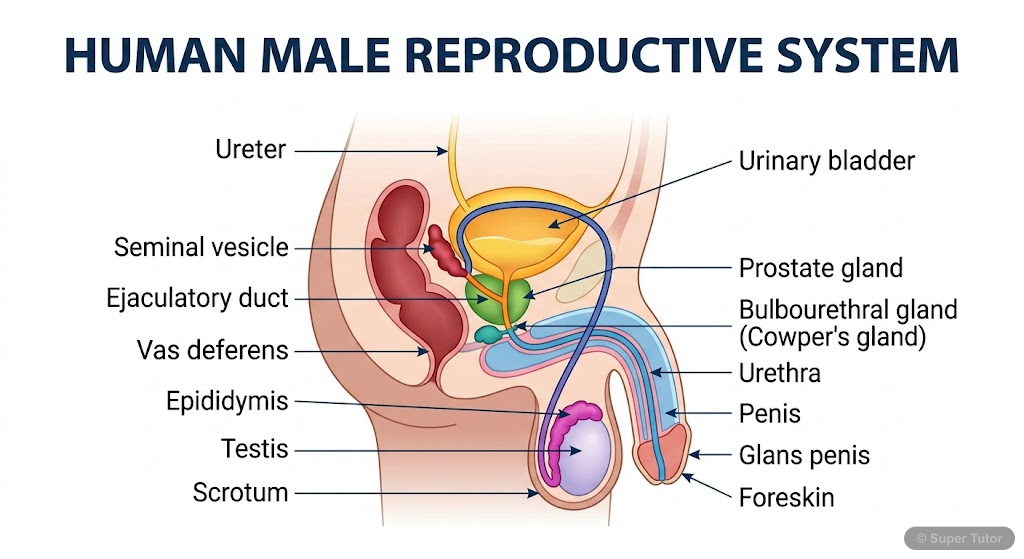
Learn better with visuals Super Tutor has hundreds of illustrations like this across every chapter — all free to try.
Get startedOverview
Reproduction is a fundamental life process that ensures the continuity of species. Unlike other life processes such as nutrition, respiration, and excretion, reproduction is not essential for maintaining the life of an individual organism. However, it is crucial for the survival of the species. This
Key Concepts
Reproduction involves creating copies of DNA
Reproduction involves creating copies of DNA blueprints. The DNA copying mechanism is not absolutely accurate, leading to variations. These variations
New generations are created from
New generations are created from a single individual without the involvement of gametes. Types include binary fission (Amoeba), multiple fission (Plas
Involves two individuals combining their genetic
Involves two individuals combining their genetic material to produce offspring. This process increases variation by combining DNA from two different o
Sexual reproduction occurs through flowers containing
Sexual reproduction occurs through flowers containing stamens (male parts producing pollen) and pistil (female parts containing ovules). Pollination t
Males have testes producing sperm
Males have testes producing sperm, while females have ovaries producing eggs. The systems are designed for internal fertilization and embryo developme
Learning Objectives
- Understand why organisms reproduce and its importance for species survival
- Learn about asexual reproduction and its various types including fission, fragmentation, regeneration, budding, vegetative propagation, and spore formation
- Explore sexual reproduction and understand why it is advantageous for creating variations
- Study reproduction in flowering plants including pollination, fertilization, and seed formation
- Understand human reproductive systems and the process of sexual maturation
Frequently Asked Questions
What are the important topics in How do Organisms Reproduce? for Rajasthan Board Class 10 Science?
How to score full marks in How do Organisms Reproduce? — Rajasthan Board Class 10 Science?
Sources & Official References
Content is aligned to the official syllabus. Refer to the board website for the latest curriculum.
More resources for How do Organisms Reproduce?
Important Questions
Practice with board exam-style questions
Syllabus
What topics to cover
Revision Notes
Key points for last-minute revision
Study Plan
Step-by-step plan to ace this chapter
Flashcards
Quick-fire cards for active recall
Formula Sheet
All formulas in one place
Practice Quiz
Test yourself with a quick quiz
Concept Maps
See how topics connect visually
For serious students
Get the full How do Organisms Reproduce? chapter — for free.
Quizzes, flashcards, AI doubt-solver and a step-by-step study plan for Rajasthan Board Class 10 Science.