Microbes in Human Welfare
Rajasthan Board · Class 12 · Biology
Summary of Microbes in Human Welfare for Rajasthan Board Class 12 Biology. Key concepts, important points, and chapter overview.
Interactive on Super Tutor
Studying Microbes in Human Welfare? Get the full interactive chapter.
Quizzes, flashcards, AI doubt-solver and a step-by-step study plan — built for chapter summary and more.
1,000+ Class 12 students started this chapter today
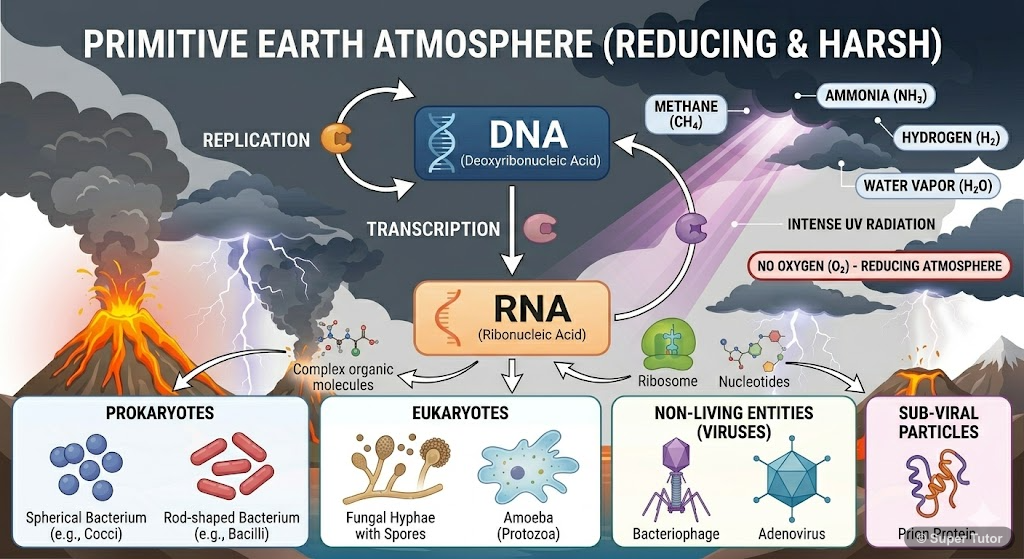
This is just one of 11+ visuals inside Super Tutor's Microbes in Human Welfare chapter
Explore the full setOverview
Microbes are microscopic organisms that form a major component of biological systems on Earth. While many people associate microbes only with diseases, this chapter reveals the numerous beneficial roles microbes play in human welfare. From the food we eat daily to industrial processes, sewage treatm
Key Concepts
Lactic Acid Bacteria (LAB) like Lactobacillus
Lactic Acid Bacteria (LAB) like Lactobacillus convert milk to curd by producing acids that coagulate milk proteins and increase vitamin B12. Baker's y
Microbes are used in large fermentors
Microbes are used in large fermentors for industrial production. Yeasts produce alcoholic beverages (wine, beer, whisky, brandy, rum) through ethanol
Antibiotics are chemical substances produced by
Antibiotics are chemical substances produced by microbes that can kill or inhibit disease-causing organisms. Penicillin, discovered by Alexander Flemi
Municipal sewage treatment occurs in two
Municipal sewage treatment occurs in two stages: Primary treatment involves physical removal of debris and particles through filtration and sedimentat
Methanogens like Methanobacterium produce methane from
Methanogens like Methanobacterium produce methane from organic waste in anaerobic conditions. Cattle dung, rich in these bacteria from rumen digestion
Learning Objectives
- Understand the beneficial roles of microbes in food production and processing
- Learn about industrial applications of microbes including antibiotic production
- Comprehend the role of microbes in sewage treatment and waste management
- Explore biogas production and its significance in rural energy solutions
- Understand biocontrol methods as alternatives to chemical pesticides
Frequently Asked Questions
What are the important topics in Microbes in Human Welfare for Rajasthan Board Class 12 Biology?
How to score full marks in Microbes in Human Welfare — Rajasthan Board Class 12 Biology?
Sources & Official References
Content is aligned to the official syllabus. Refer to the board website for the latest curriculum.
More resources for Microbes in Human Welfare
Important Questions
Practice with board exam-style questions
Syllabus
What topics to cover
Revision Notes
Key points for last-minute revision
Study Plan
Step-by-step plan to ace this chapter
Flashcards
Quick-fire cards for active recall
Formula Sheet
All formulas in one place
Practice Quiz
Test yourself with a quick quiz
Concept Maps
See how topics connect visually
For serious students
Get the full Microbes in Human Welfare chapter — for free.
Quizzes, flashcards, AI doubt-solver and a step-by-step study plan for Rajasthan Board Class 12 Biology.