Secondary Activities
CBSE · Class 12 · Geography
Summary of Secondary Activities for CBSE Class 12 Geography. Key concepts, important points, and chapter overview.
Interactive on Super Tutor
Studying Secondary Activities? Get the full interactive chapter.
Quizzes, flashcards, AI doubt-solver and a step-by-step study plan — built for chapter summary and more.
1,000+ Class 12 students started this chapter today
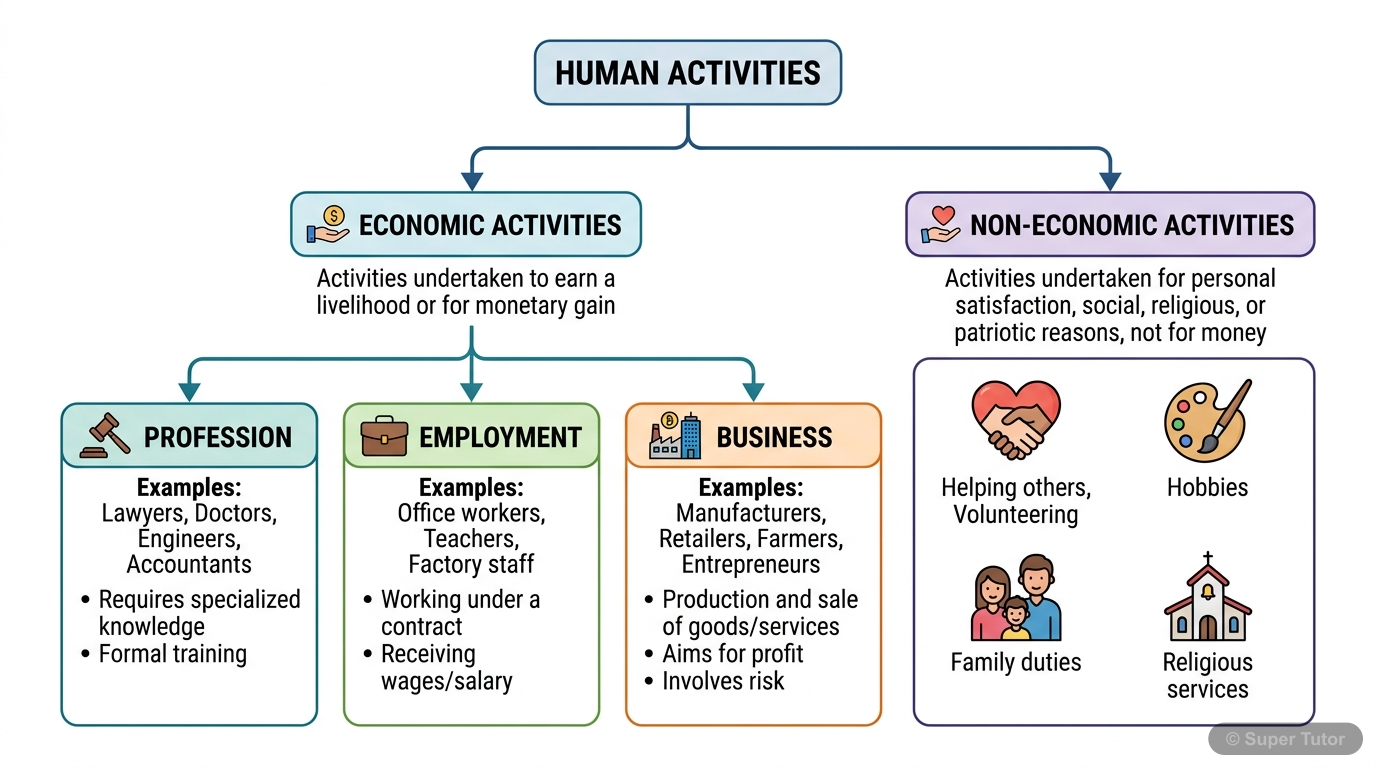
This is just one of 15+ visuals inside Super Tutor's Secondary Activities chapter
Explore the full setOverview
Secondary activities form the backbone of modern industrial economies by transforming raw materials into valuable finished products. This chapter explores how secondary activities add value to primary resources through manufacturing, processing, and construction industries. From simple handicrafts t
Key Concepts
Economic activities that add value
Economic activities that add value to natural resources by transforming raw materials into valuable products. Examples include converting cotton into
The process of transforming raw materials
The process of transforming raw materials into finished goods of higher value through the application of power, mass production techniques, and specia
Key factors influencing where industries establish
Key factors influencing where industries establish include access to markets, raw materials, labor supply, energy sources, transportation facilities,
The smallest manufacturing units where artisans
The smallest manufacturing units where artisans use local raw materials and simple tools to produce everyday goods in their homes with family members.
Industrial production characterized by large markets
Industrial production characterized by large markets, diverse raw materials, enormous energy consumption, specialized workers, advanced technology, as
Learning Objectives
- Understand the concept and importance of secondary activities in economic development
- Analyze the characteristics of modern large-scale manufacturing
- Examine factors influencing industrial location decisions
- Classify manufacturing industries based on size, inputs, outputs, and ownership
- Evaluate the role of high-technology industries in modern manufacturing
Frequently Asked Questions
What are the important topics in Secondary Activities for CBSE Class 12 Geography?
How to score full marks in Secondary Activities — CBSE Class 12 Geography?
Sources & Official References
- NCERT Official — ncert.nic.in
- CBSE Academic — cbseacademic.nic.in
- CBSE Official — cbse.gov.in
- National Education Policy 2020 — education.gov.in
Content is aligned to the official syllabus. Refer to the board website for the latest curriculum.
More resources for Secondary Activities
Important Questions
Practice with board exam-style questions
Syllabus
What topics to cover
Revision Notes
Key points for last-minute revision
Study Plan
Step-by-step plan to ace this chapter
Flashcards
Quick-fire cards for active recall
Formula Sheet
All formulas in one place
Practice Quiz
Test yourself with a quick quiz
Concept Maps
See how topics connect visually
For serious students
Get the full Secondary Activities chapter — for free.
Quizzes, flashcards, AI doubt-solver and a step-by-step study plan for CBSE Class 12 Geography.