Alligations and Mixtures — Study Plan
CAT · Quantitative Aptitude
Step-by-step Alligations and Mixtures study plan for CAT Quantitative Aptitude 2026 — structured month-wise approach to mastering this chapter.
Interactive on Super Tutor
Studying Alligations and Mixtures? Get the full chapter — free.
Practice questions, revision notes, formula sheet and AI doubt-solver — built for CAT Quantitative Aptitude.
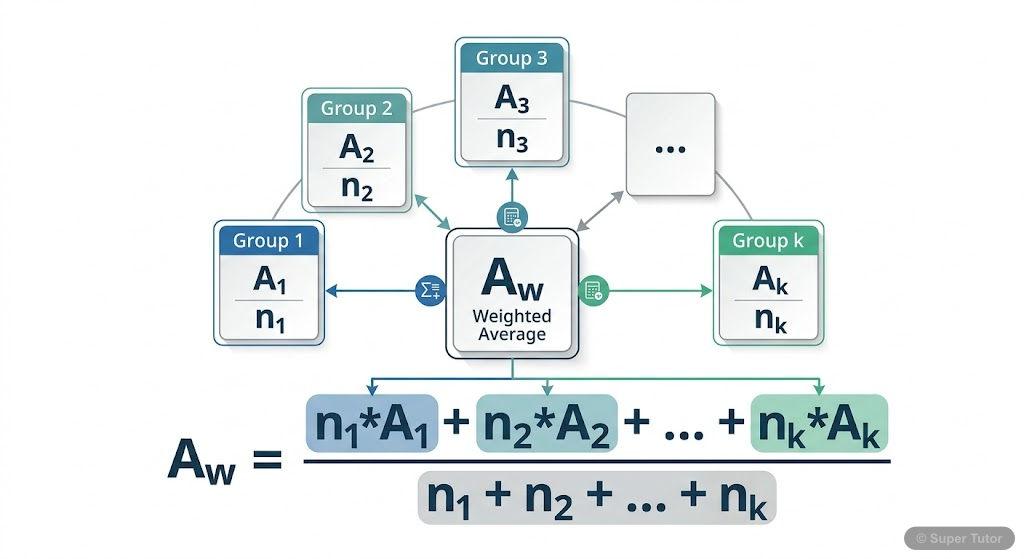
Learn better with visuals Super Tutor has hundreds of illustrations like this across every chapter — all free to try.
Get startedHow to Study Alligations and Mixtures
A structured approach to studying Alligations and Mixtures for CAT Quantitative Aptitude.
Study Plan for Alligations and Mixtures
Day 1–2: Learn the Theory
Study the chapter thoroughly. Note down definitions, formulas, and key concepts.
Day 3: Practice Problems
Solve practice questions and previous year CAT problems. There are 54 questions available for this chapter.
Day 4: Revise & Test
Revise key formulas and concepts without looking at notes. Take a practice quiz to test your understanding.
What to Focus On
- Weighted average is used when groups of different sizes are combined
- Formula: Aw = (n₁A₁ + n₂A₂)/(n₁ + n₂)
- We can work with ratios instead of actual quantities
- Alligation formula: n₁/n₂ = (A₂ - Aw)/(Aw - A₁)
- Cross method provides visual representation
- Cross proportionality: differences are inversely related to weights
- Visual representation using a number line
- n₂ corresponds to distance (Aw - A₁)
- n₁ corresponds to distance (A₂ - Aw)
Common Mistakes to Avoid
In alligation, the ratio n1:n2 equals the ratio of differences (A2-Aw):(Aw-A1), not the cross ratio
The weighted average formula can be used directly without considering the cross-proportionality in alligation problems
When dealing with percentages in mixtures, students can directly use the percentage values in alligation without converting to fractions
Want a personalised study plan?
Super Tutor creates a day-by-day plan for CAT Quantitative Aptitude that adapts to your exam date and pace.
Create My Study Plan — FreeFrequently Asked Questions
What topics are covered in Alligations and Mixtures for CAT?
How important is Alligations and Mixtures for CAT?
How to prepare Alligations and Mixtures for CAT?
More resources for Alligations and Mixtures
For CAT aspirants
Get the full Alligations and Mixtures chapter — for free.
Practice questions, revision notes, formula sheet and AI doubt-solver for CAT Quantitative Aptitude.