Semiconductor Electronics Materials, Devices and Simple Circuits — Study Plan
KEAM · Physics
Step-by-step Semiconductor Electronics Materials, Devices and Simple Circuits study plan for KEAM Physics 2026 — structured month-wise approach to mastering this chapter.
Interactive on Super Tutor
Studying Semiconductor Electronics Materials, Devices and Simple Circuits? Get the full chapter — free.
Practice questions, revision notes, formula sheet and AI doubt-solver — built for KEAM Physics.
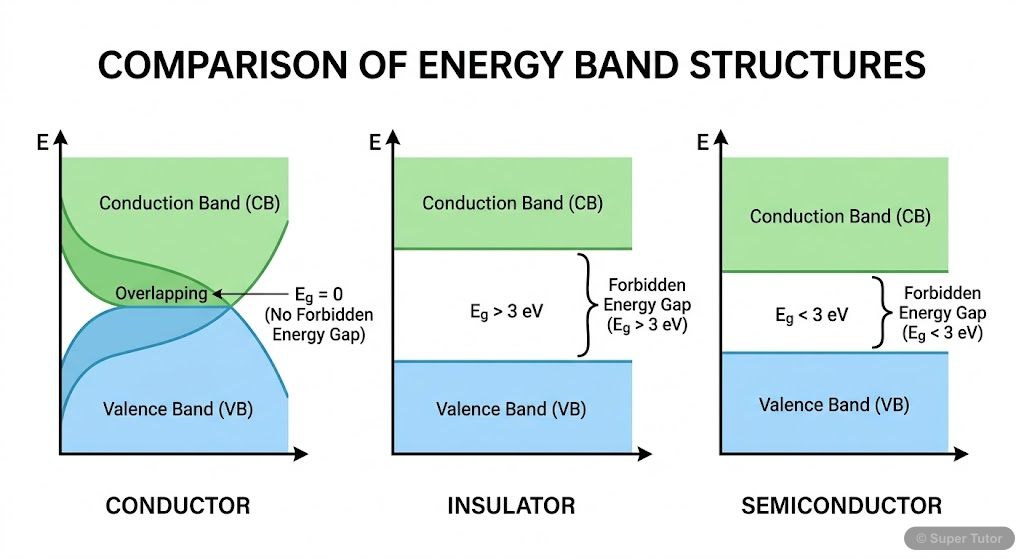
Super Tutor has 19+ illustrations like this for Semiconductor Electronics Materials, Devices and Simple Circuits alone — flashcards, concept maps, and step-by-step visuals.
See them allHow to Study Semiconductor Electronics Materials, Devices and Simple Circuits
A structured approach to studying Semiconductor Electronics Materials, Devices and Simple Circuits for KEAM Physics.
Study Plan for Semiconductor Electronics Materials, Devices and Simple Circuits
Day 1–2: Learn the Theory
Study the chapter thoroughly. Note down definitions, formulas, and key concepts.
Day 3: Practice Problems
Solve practice questions and previous year KEAM problems. There are 409 questions available for this chapter.
Day 4: Revise & Test
Revise key formulas and concepts without looking at notes. Take a practice quiz to test your understanding.
What to Focus On
- Semiconductors replaced bulky vacuum tubes in electronic devices
- Energy band theory explains electrical properties of materials
- Semiconductors have small forbidden energy gaps (~1 eV)
- Pure semiconductors have equal numbers of electrons and holes
- Conductivity increases with temperature due to more charge carriers
- Holes behave as positive charge carriers
- Doping with pentavalent atoms creates n-type semiconductors
- Doping with trivalent atoms creates p-type semiconductors
- Majority carriers determine the type of semiconductor
Common Mistakes to Avoid
In a p-n junction diode, current flows from p-side to n-side in forward bias because holes physically move from p to n
Doping always increases conductivity of a semiconductor
The depletion region in a p-n junction contains no charges at all
Want a personalised study plan?
Super Tutor creates a day-by-day plan for KEAM Physics that adapts to your exam date and pace.
Create My Study Plan — FreeFrequently Asked Questions
What topics are covered in Semiconductor Electronics Materials, Devices and Simple Circuits for KEAM?
How important is Semiconductor Electronics Materials, Devices and Simple Circuits for KEAM?
How to prepare Semiconductor Electronics Materials, Devices and Simple Circuits for KEAM?
More resources for Semiconductor Electronics Materials, Devices and Simple Circuits
Syllabus
Semiconductor Electronics Materials, Devices and Simple Circuits — syllabus
Revision Notes
Semiconductor Electronics Materials, Devices and Simple Circuits — revision notes
Important Topics
Semiconductor Electronics Materials, Devices and Simple Circuits — important topics
Practice Questions
Semiconductor Electronics Materials, Devices and Simple Circuits — practice questions
Formula Sheet
Semiconductor Electronics Materials, Devices and Simple Circuits — formula sheet
For KEAM aspirants
Get the full Semiconductor Electronics Materials, Devices and Simple Circuits chapter — for free.
Practice questions, revision notes, formula sheet and AI doubt-solver for KEAM Physics.