Practical Chemistry
ICSE · Class 10 · Chemistry
Summary of Practical Chemistry for ICSE Class 10 Chemistry. Key concepts, important points, and chapter overview.
Interactive on Super Tutor
Studying Practical Chemistry? Get the full interactive chapter.
Quizzes, flashcards, AI doubt-solver and a step-by-step study plan — built for chapter summary and more.
1,000+ Class 10 students started this chapter today
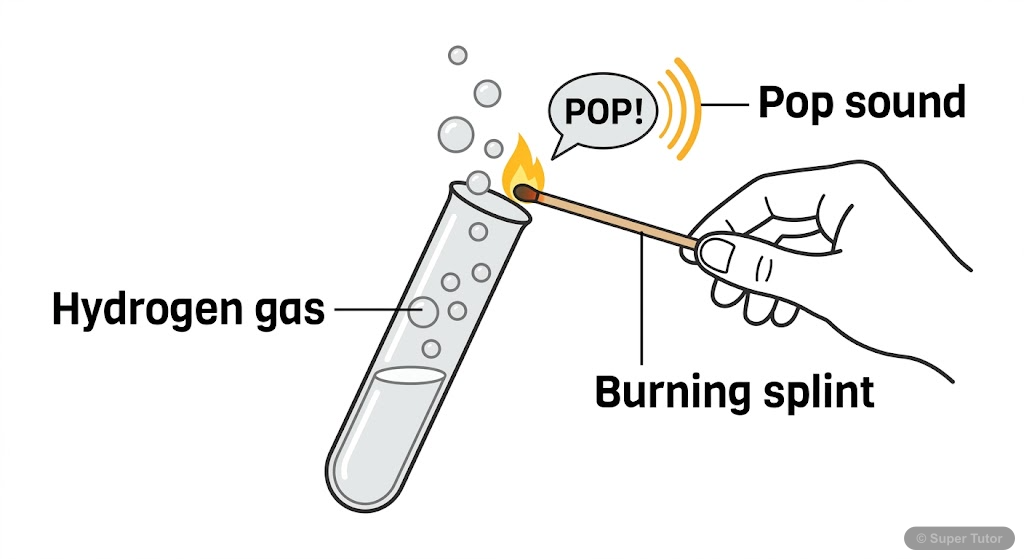
Super Tutor has 18+ illustrations like this for Practical Chemistry alone — flashcards, concept maps, and step-by-step visuals.
See them allOverview
Practical Chemistry is the hands-on application of chemical principles through laboratory experiments and observations. This chapter focuses on identifying different gases, ions, and compounds through systematic testing methods. Students learn to recognize chemical reactions, identify unknown substa
Key Concepts
Normal salts consist of cations (positively
Normal salts consist of cations (positively charged ions) and anions (negatively charged ions). Cations are identified through reactions with alkalis
Ten important gases can be identified
Ten important gases can be identified through specific tests: NH₃ (turns red litmus blue, white fumes with HCl), CO₂ (turns lime water milky), Cl₂ (bl
Different metal cations show characteristic reactions
Different metal cations show characteristic reactions with NaOH and NH₄OH: NH₄⁺ evolves NH₃ gas, Pb²⁺ gives white precipitate soluble in excess NaOH,
Anions are identified by treating
Anions are identified by treating the substance with dilute or concentrated acids and observing evolved gases: CO₃²⁻ with dil. H₂SO₄ gives CO₂, SO₃²⁻
A dry test using chloride form
A dry test using chloride form of salt mixed with conc. HCl, introduced to Bunsen flame using platinum wire loop. Different cations produce characteri
Learning Objectives
- Identify common gases (H₂, O₂, CO₂, Cl₂, HCl, SO₂, H₂S, NH₃, H₂O vapor, NO₂) through characteristic tests
- Recognize important cations (Ca²⁺, Cu²⁺, Fe²⁺, Fe³⁺, Pb²⁺, Zn²⁺, NH₄⁺) using alkali tests and specific reagents
- Identify anions (CO₃²⁻, Cl⁻, NO₃⁻, S²⁻, SO₃²⁻, SO₄²⁻) through acid-base reactions and gas evolution
- Perform flame tests to identify specific metal cations
- Observe and interpret the effects of heat on various chemical compounds
Frequently Asked Questions
What are the important topics in Practical Chemistry for ICSE Class 10 Chemistry?
How to score full marks in Practical Chemistry — ICSE Class 10 Chemistry?
Sources & Official References
Content is aligned to the official syllabus. Refer to the board website for the latest curriculum.
More resources for Practical Chemistry
Important Questions
Practice with board exam-style questions
Syllabus
What topics to cover
Revision Notes
Key points for last-minute revision
Study Plan
Step-by-step plan to ace this chapter
Flashcards
Quick-fire cards for active recall
Formula Sheet
All formulas in one place
Practice Quiz
Test yourself with a quick quiz
Concept Maps
See how topics connect visually
For serious students
Get the full Practical Chemistry chapter — for free.
Quizzes, flashcards, AI doubt-solver and a step-by-step study plan for ICSE Class 10 Chemistry.