Our Environment
CBSE · Class 10 · Science
Quick revision notes for Our Environment — CBSE Class 10 Science. Key concepts, formulas, and definitions for last-minute revision.
Interactive on Super Tutor
Studying Our Environment? Get the full interactive chapter.
Quizzes, flashcards, AI doubt-solver and a step-by-step study plan — built for revision notes and more.
1,000+ Class 10 students started this chapter today
Learn better with visuals Super Tutor has hundreds of illustrations like this across every chapter — all free to try.
Get startedKey Topics to Revise
Ecosystem Components
- An ecosystem consists of biotic components (living organisms) and abiotic components (physical factors like temperature, rainfall, wind, soil)
- Biotic components include producers (green plants), consumers (herbivores, carnivores, omnivores), and decomposers (bacteria and fungi)
- Producers make their own food through photosynthesis using sunlight, water, and carbon dioxide
Food Chains and Food Webs
- Food chain shows the flow of energy from one organism to another through feeding relationships
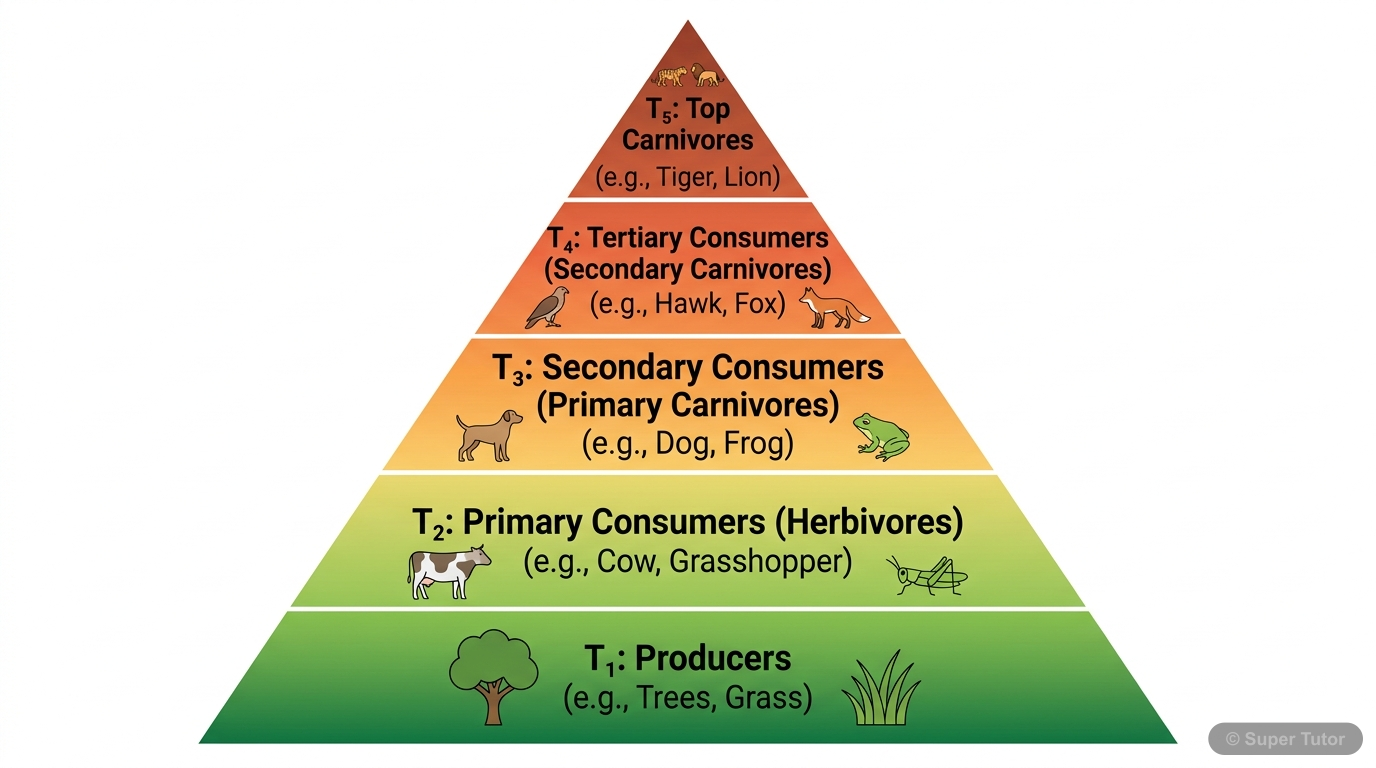
- Each step in a food chain is called a trophic level
- Trophic levels: Producers (1st) → Primary consumers (2nd) → Secondary consumers (3rd) → Tertiary consumers (4th)
Ozone Layer Depletion
- Ozone (O₃) is formed by three oxygen atoms and is poisonous at ground level
- Ozone layer in upper atmosphere protects Earth from harmful UV radiation
- UV radiation can cause skin cancer and damage to living organisms
Waste Management
- Human activities generate various types of waste materials daily
- Biodegradable substances can be broken down by biological processes
- Non-biodegradable substances cannot be broken down by living organisms
Get complete notes with diagrams and examples
Full NotesKey Concepts
Frequently Asked Questions
What are the important topics in Our Environment for CBSE Class 10 Science?
How to score full marks in Our Environment — CBSE Class 10 Science?
Sources & Official References
- NCERT Official — ncert.nic.in
- CBSE Academic — cbseacademic.nic.in
- CBSE Official — cbse.gov.in
- National Education Policy 2020 — education.gov.in
Content is aligned to the official syllabus. Refer to the board website for the latest curriculum.
More resources for Our Environment
Important Questions
Practice with board exam-style questions
Syllabus
What topics to cover
Study Plan
Step-by-step plan to ace this chapter
Flashcards
Quick-fire cards for active recall
Formula Sheet
All formulas in one place
Chapter Summary
Understand the chapter at a glance
Practice Quiz
Test yourself with a quick quiz
Concept Maps
See how topics connect visually
For serious students
Get the full Our Environment chapter — for free.
Quizzes, flashcards, AI doubt-solver and a step-by-step study plan for CBSE Class 10 Science.