Our Environment
CBSE · Class 10 · Science
Summary of Our Environment for CBSE Class 10 Science. Key concepts, important points, and chapter overview.
Interactive on Super Tutor
Studying Our Environment? Get the full interactive chapter.
Quizzes, flashcards, AI doubt-solver and a step-by-step study plan — built for chapter summary and more.
1,000+ Class 10 students started this chapter today
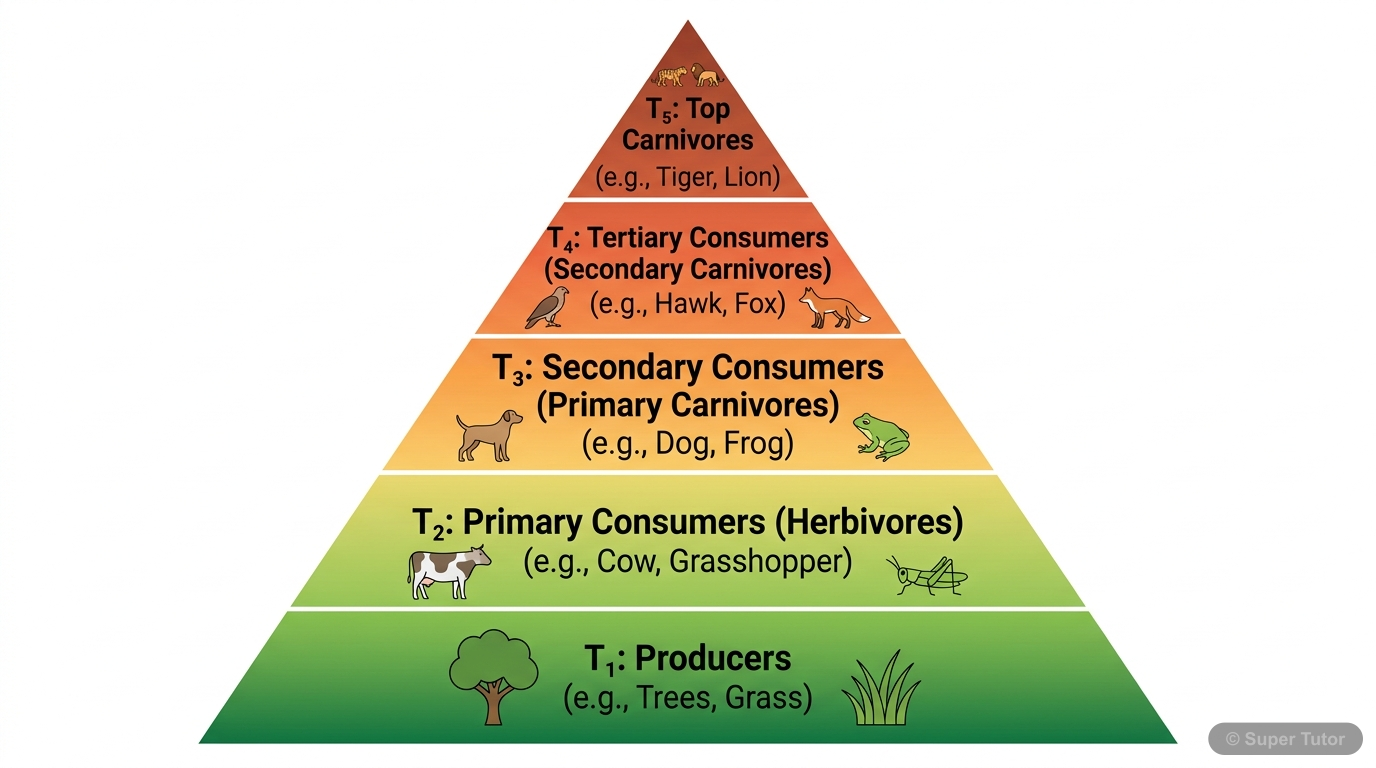
Learn better with visuals Super Tutor has hundreds of illustrations like this across every chapter — all free to try.
Get startedOverview
Our environment consists of all living and non-living components that surround us and interact with each other. This chapter explores how organisms interact within ecosystems, how energy flows through different levels of life, and how human activities impact the delicate balance of nature. Understan
Key Concepts
An ecosystem is a self
An ecosystem is a self-sustaining unit where all living organisms (biotic components) like plants, animals, and microorganisms interact with non-livin
A food chain shows the linear
A food chain shows the linear sequence of organisms where each organism feeds on the previous one (grass → deer → tiger). A food web is a complex netw
Trophic levels represent the position
Trophic levels represent the position of organisms in a food chain. Producers (plants) are at the first level, primary consumers (herbivores) at the s
Only about 10% of energy
Only about 10% of energy is transferred from one trophic level to the next. The rest is lost as heat, used in metabolism, or for movement. This explai
The concentration of harmful chemicals like
The concentration of harmful chemicals like pesticides increases as we move up the food chain. Since these chemicals are non-biodegradable, they accum
Learning Objectives
- Understand the components of an ecosystem and their interactions
- Learn about food chains, food webs, and energy flow in ecosystems
- Comprehend the concept of trophic levels and biological magnification
- Analyze the impact of human activities on the environment
- Study ozone layer depletion and its consequences
Frequently Asked Questions
What are the important topics in Our Environment for CBSE Class 10 Science?
How to score full marks in Our Environment — CBSE Class 10 Science?
Sources & Official References
- NCERT Official — ncert.nic.in
- CBSE Academic — cbseacademic.nic.in
- CBSE Official — cbse.gov.in
- National Education Policy 2020 — education.gov.in
Content is aligned to the official syllabus. Refer to the board website for the latest curriculum.
More resources for Our Environment
Important Questions
Practice with board exam-style questions
Syllabus
What topics to cover
Revision Notes
Key points for last-minute revision
Study Plan
Step-by-step plan to ace this chapter
Flashcards
Quick-fire cards for active recall
Formula Sheet
All formulas in one place
Practice Quiz
Test yourself with a quick quiz
Concept Maps
See how topics connect visually
For serious students
Get the full Our Environment chapter — for free.
Quizzes, flashcards, AI doubt-solver and a step-by-step study plan for CBSE Class 10 Science.