Introduction to Logical Reasoning — Study Plan
SNAP · Data Interpretation & Logical Reasoning
Step-by-step study plan for Introduction to Logical Reasoning — structured approach to mastering this chapter for SNAP Data Interpretation & Logical Reasoning.
Interactive on Super Tutor
Studying Introduction to Logical Reasoning? Get the full chapter — free.
Practice questions, revision notes, formula sheet and AI doubt-solver — built for SNAP Data Interpretation & Logical Reasoning.
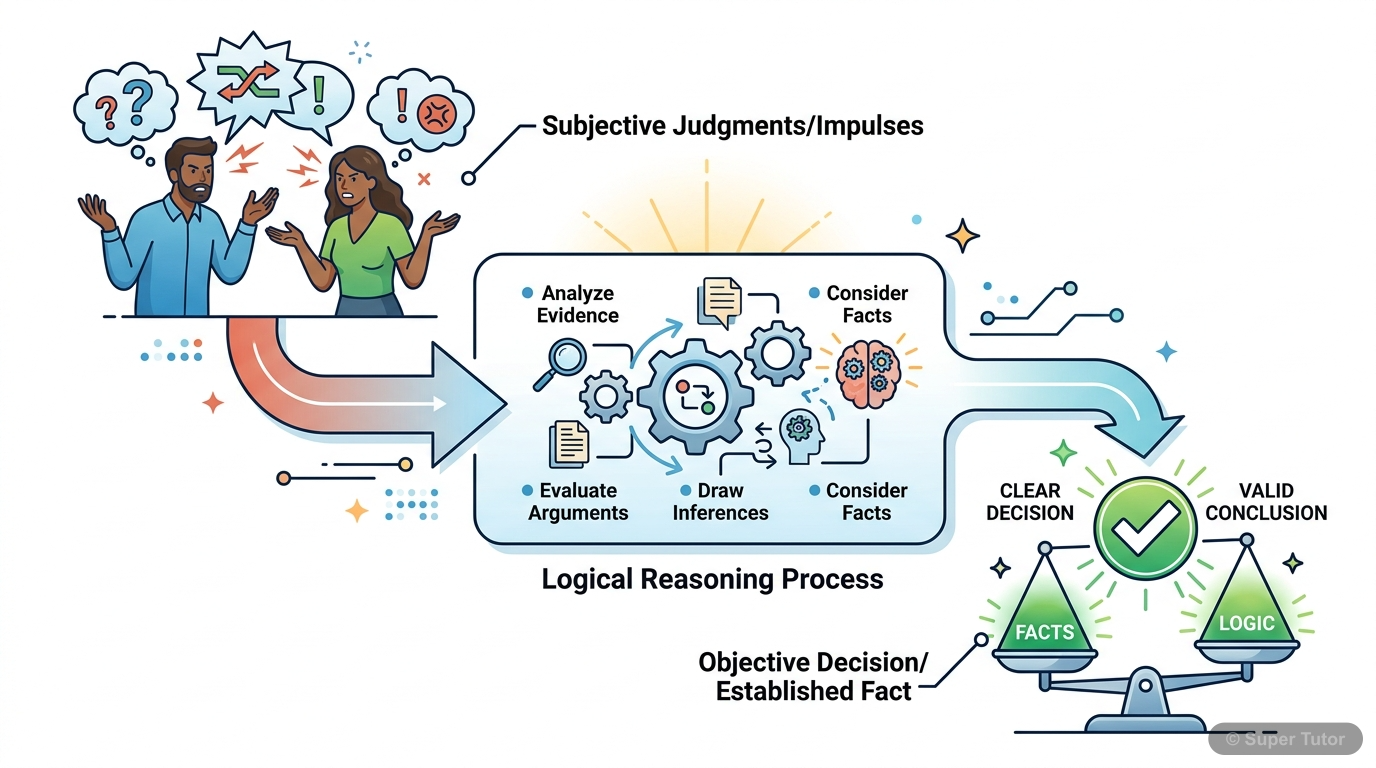
This is just one of 7+ visuals inside Super Tutor's Introduction to Logical Reasoning chapter
Explore the full setHow to Study Introduction to Logical Reasoning
A structured approach to studying Introduction to Logical Reasoning for SNAP Data Interpretation & Logical Reasoning.
Study Plan for Introduction to Logical Reasoning
Day 1–2: Learn the Theory
Study the chapter thoroughly. Note down definitions, formulas, and key concepts.
Day 3: Practice Problems
Solve practice questions and previous year SNAP problems. There are 44 questions available for this chapter.
Day 4: Revise & Test
Revise key formulas and concepts without looking at notes. Take a practice quiz to test your understanding.
What to Focus On
- Logic focuses on establishing facts through sound reasoning rather than absolute truth
- It helps overcome personal biases and subjective judgments
- The word 'logic' originates from Greek 'logos' meaning reason or principle
- Logic serves as a systematic approach to reasoning
- It provides guiding principles for various disciplines and sciences
- Judicial systems depend heavily on logical reasoning processes
- Inductive reasoning: moves from particular facts to general conclusions
- Deductive reasoning: moves from general facts to particular conclusions
- Both types complement each other in logical thinking
Common Mistakes to Avoid
Logic is about finding absolute truth - if something is true in real life, it must be logically correct
Strong emotions and personal beliefs make arguments more logical and convincing
Inductive and deductive reasoning are the same - both move from general to specific
Want a personalised study plan?
Super Tutor creates a day-by-day plan for SNAP Data Interpretation & Logical Reasoning that adapts to your exam date and pace.
Create My Study Plan — FreeFrequently Asked Questions
What topics are covered in Introduction to Logical Reasoning for SNAP?
How important is Introduction to Logical Reasoning for SNAP?
How to prepare Introduction to Logical Reasoning for SNAP?
More resources for Introduction to Logical Reasoning
Syllabus
Introduction to Logical Reasoning — syllabus
Revision Notes
Introduction to Logical Reasoning — revision notes
Important Topics
Introduction to Logical Reasoning — important topics
Practice Questions
Introduction to Logical Reasoning — practice questions
Formula Sheet
Introduction to Logical Reasoning — formula sheet
For SNAP aspirants
Get the full Introduction to Logical Reasoning chapter — for free.
Practice questions, revision notes, formula sheet and AI doubt-solver for SNAP Data Interpretation & Logical Reasoning.