Introduction to Data Interpretation — Study Plan
SNAP · Data Interpretation & Logical Reasoning
Step-by-step study plan for Introduction to Data Interpretation — structured approach to mastering this chapter for SNAP Data Interpretation & Logical Reasoning.
Interactive on Super Tutor
Studying Introduction to Data Interpretation? Get the full chapter — free.
Practice questions, revision notes, formula sheet and AI doubt-solver — built for SNAP Data Interpretation & Logical Reasoning.
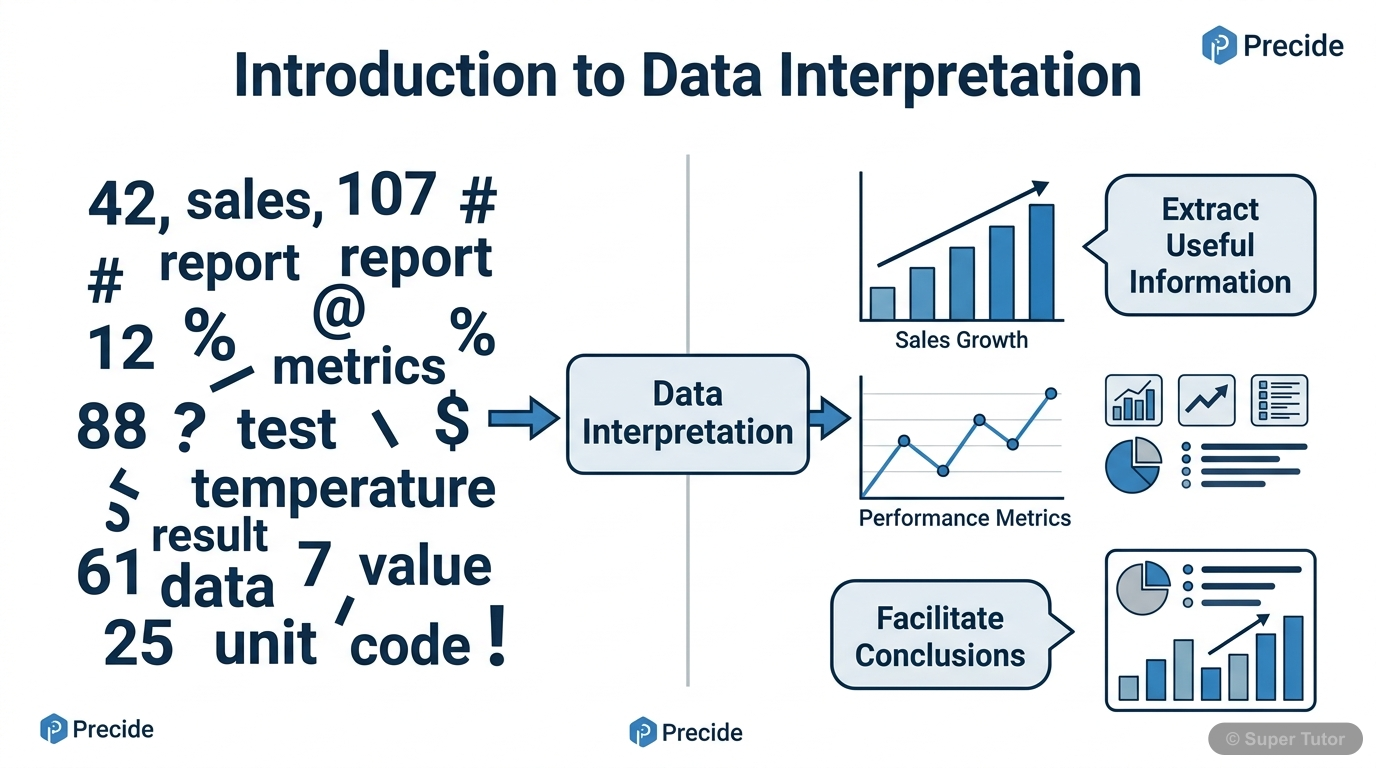
Super Tutor has 12+ illustrations like this for Introduction to Data Interpretation alone — flashcards, concept maps, and step-by-step visuals.
See them allHow to Study Introduction to Data Interpretation
A structured approach to studying Introduction to Data Interpretation for SNAP Data Interpretation & Logical Reasoning.
Study Plan for Introduction to Data Interpretation
Day 1–2: Learn the Theory
Study the chapter thoroughly. Note down definitions, formulas, and key concepts.
Day 3: Practice Problems
Solve practice questions and previous year SNAP problems. There are 45 questions available for this chapter.
Day 4: Revise & Test
Revise key formulas and concepts without looking at notes. Take a practice quiz to test your understanding.
What to Focus On
- Data represents facts, measurements, or observations in a formalized manner
- Discrete data can be counted (1, 2, 3...) while continuous data takes any value within a range
- Organized data is essential for making informed decisions and validating arguments
- Narration-based format presents data through stories and scenarios
- Pictorial format uses visual elements for data presentation
- Choice of format depends on the type of data and analysis required
- Most fundamental and versatile method of data presentation
- Organizes data in rows and columns for easy comparison
- Can represent any type of data that other formats can handle
Common Mistakes to Avoid
In pie charts, the size of the sector depends on both the central angle and the radius of the circle
In stacked bar charts, individual values can be read directly from the bar heights
Percentage increase calculations can be done by simply subtracting percentages
Want a personalised study plan?
Super Tutor creates a day-by-day plan for SNAP Data Interpretation & Logical Reasoning that adapts to your exam date and pace.
Create My Study Plan — FreeFrequently Asked Questions
What topics are covered in Introduction to Data Interpretation for SNAP?
How important is Introduction to Data Interpretation for SNAP?
How to prepare Introduction to Data Interpretation for SNAP?
More resources for Introduction to Data Interpretation
Syllabus
Introduction to Data Interpretation — syllabus
Revision Notes
Introduction to Data Interpretation — revision notes
Important Topics
Introduction to Data Interpretation — important topics
Practice Questions
Introduction to Data Interpretation — practice questions
Formula Sheet
Introduction to Data Interpretation — formula sheet
For SNAP aspirants
Get the full Introduction to Data Interpretation chapter — for free.
Practice questions, revision notes, formula sheet and AI doubt-solver for SNAP Data Interpretation & Logical Reasoning.