Averages — Study Plan
XAT · Quantitative Ability & Data Interpretation
Step-by-step Averages study plan for XAT Quantitative Ability & Data Interpretation 2026 — structured month-wise approach to mastering this chapter.
Interactive on Super Tutor
Studying Averages? Get the full chapter — free.
Practice questions, revision notes, formula sheet and AI doubt-solver — built for XAT Quantitative Ability & Data Interpretation.
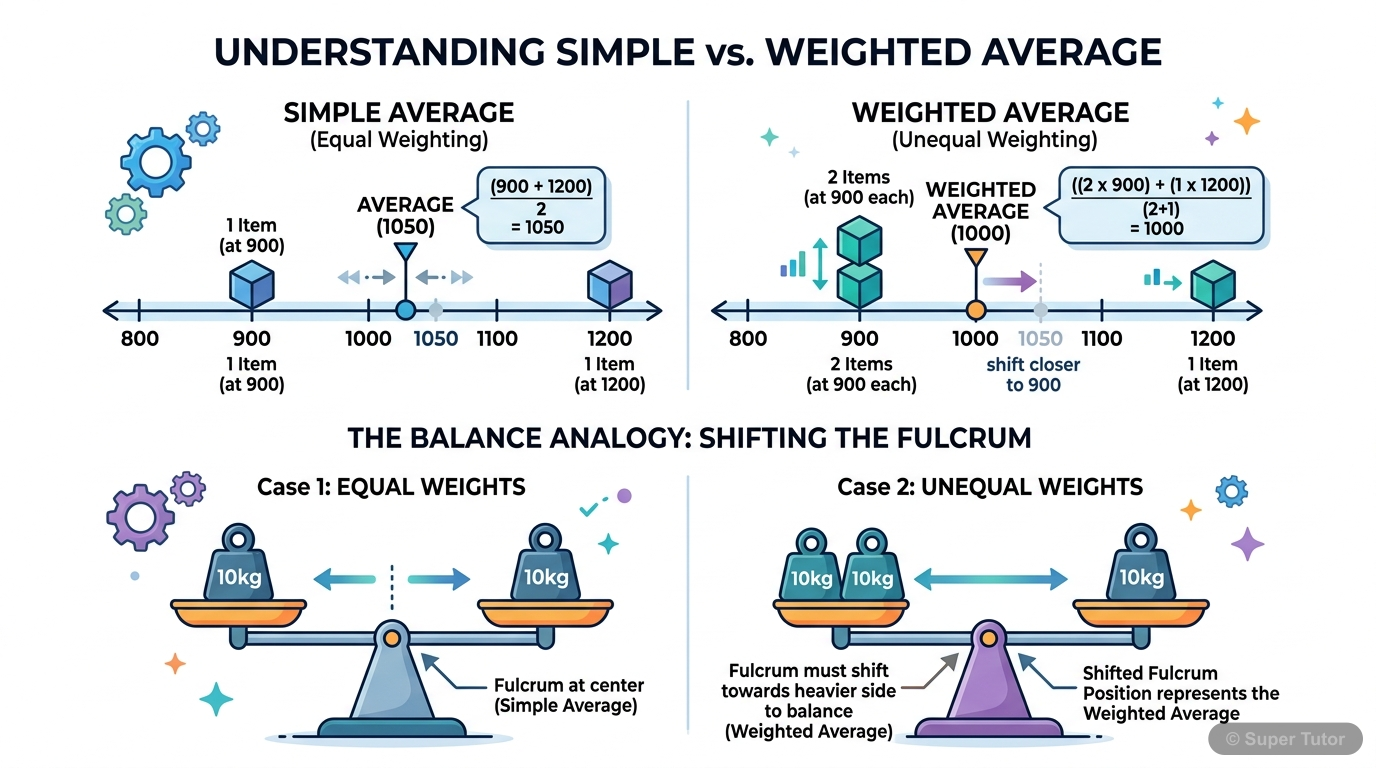
This is just one of 7+ visuals inside Super Tutor's Averages chapter
Explore the full setHow to Study Averages
A structured approach to studying Averages for XAT Quantitative Ability & Data Interpretation.
Study Plan for Averages
Day 1–2: Learn the Theory
Study the chapter thoroughly. Note down definitions, formulas, and key concepts.
Day 3: Practice Problems
Solve practice questions and previous year XAT problems. There are 58 questions available for this chapter.
Day 4: Revise & Test
Revise key formulas and concepts without looking at notes. Take a practice quiz to test your understanding.
What to Focus On
- Three measures of central tendency: Mean, Median, and Mode
- Arithmetic Mean = Sum of numbers / Count of numbers
- Median is the middle value in an ordered dataset
- Three variants of the average formula
- Average = Sum/n (when sum and count are known)
- Sum = n × Average (when average and count are known)
- Simple average treats all numbers equally
- Weighted average considers the importance of each group
- Used when combining groups of different sizes
Common Mistakes to Avoid
When combining groups with different averages, you can simply take the average of the averages to get the combined average
If a new number is added to a group and the average increases, the new number must be greater than all existing numbers
In speed problems, average speed equals the average of individual speeds
Want a personalised study plan?
Super Tutor creates a day-by-day plan for XAT Quantitative Ability & Data Interpretation that adapts to your exam date and pace.
Create My Study Plan — FreeFrequently Asked Questions
What topics are covered in Averages for XAT?
How important is Averages for XAT?
How to prepare Averages for XAT?
More resources for Averages
For XAT aspirants
Get the full Averages chapter — for free.
Practice questions, revision notes, formula sheet and AI doubt-solver for XAT Quantitative Ability & Data Interpretation.