Medieval World
NIOS · Class 10 · Social Studies
Step-by-step guide to study Medieval World in NIOS Class 10 Social Studies. Topics to cover, practice strategy, and time allocation.
Interactive on Super Tutor
Studying Medieval World? Get the full interactive chapter.
Quizzes, flashcards, AI doubt-solver and a step-by-step study plan — built for study plan and more.
1,000+ Class 10 students started this chapter today
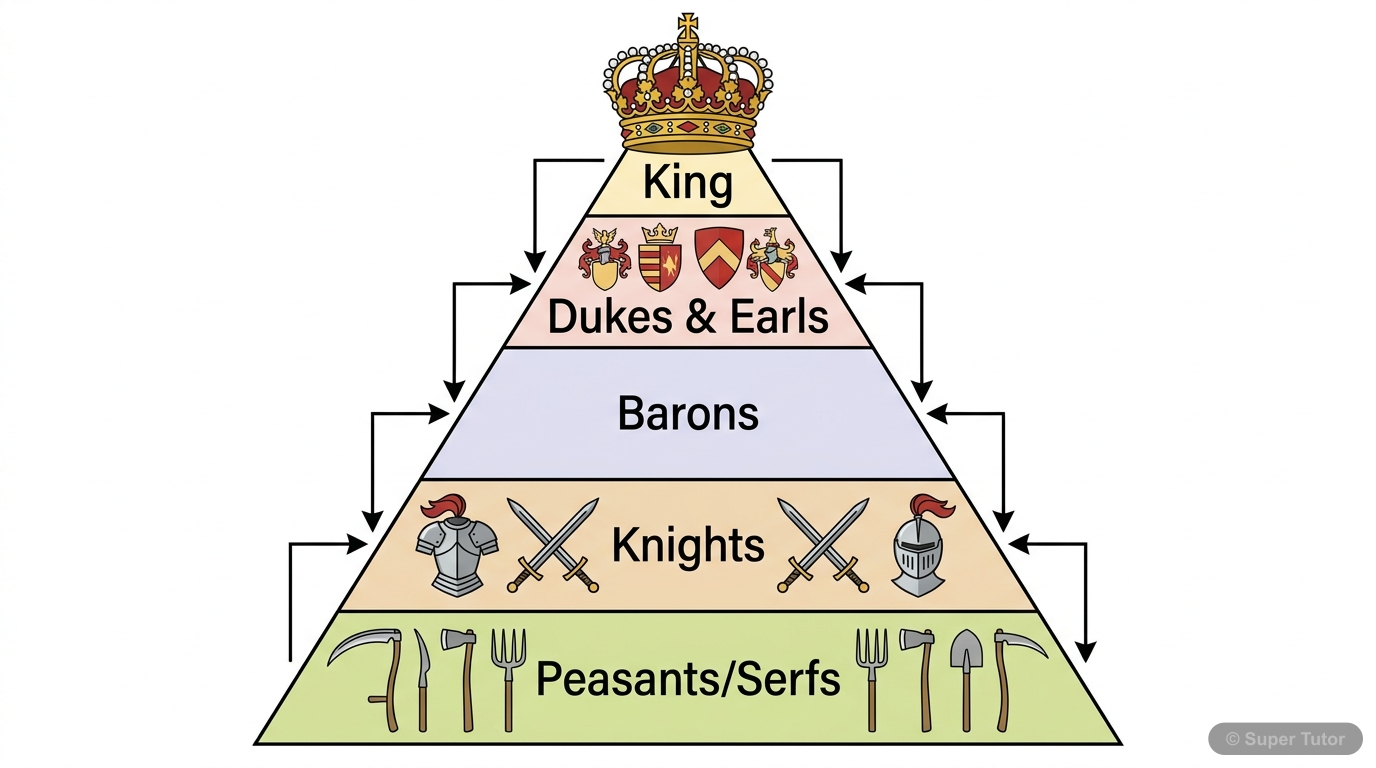
Learn better with visuals Super Tutor has hundreds of illustrations like this across every chapter — all free to try.
Get startedStudy Plan
Learn the Theory
Read the textbook chapter carefully. Note down definitions, formulas, and key concepts.
Practice Problems
Solve textbook exercises and additional practice questions. There are 88 questions available for this chapter.
Revise & Test
Revise key formulas and concepts without looking at notes. Take a practice quiz to test your understanding. Mark weak areas for re-revision.
Spaced Revision
Revisit Medieval World after a week. Use flashcards for quick recall. Solve previous year questions from this chapter.
What to Focus On
- Feudalism was a hierarchical system: King → Dukes/Earls → Barons → Knights
- Personal bonds between lord and vassal were established through elaborate ceremonies
- Serfs were peasants tied to the land who worked for lords in exchange for protection
- Islam emerged in 7th century Arabia with simple monotheistic doctrine
- Muhammad's Hijrah to Medina in 622 AD marked beginning of Islamic calendar
- Five pillars of Islam: declaration of faith, prayer, fasting, charity, pilgrimage
- Political fragmentation after Harsha made India vulnerable to invasions
- Delhi Sultanate (13th century) and Mughal Empire (16th century) established centralized rule
- Iqta system: territorial assignments to military commanders for revenue collection
Common Mistakes to Avoid
The Medieval Period was a 'Dark Age' with no progress or achievements across the world
Feudalism was the same everywhere it existed and remained unchanged throughout the medieval period
Islam spread only through conquest and force
Memory Tips
Three divisions of feudal hierarchy: King, Lords, Knights
Feudal manor had three parts: Lord's land, Peasant parcels, Common grazing
Serfs paid rent through labor services, taxes in kind, and using lord's facilities
Islam's Five Pillars: Belief, Prayer, Charity, Fasting, Pilgrimage
Want a personalised study plan?
Super Tutor creates a day-by-day plan for NIOS Class 10 Social Studies that adapts to your exam date and pace.
Create My Study Plan — FreeFrequently Asked Questions
What are the important topics in Medieval World for NIOS Class 10 Social Studies?
How to score full marks in Medieval World — NIOS Class 10 Social Studies?
Sources & Official References
Content is aligned to the official syllabus. Refer to the board website for the latest curriculum.
More resources for Medieval World
Important Questions
Practice with board exam-style questions
Syllabus
What topics to cover
Revision Notes
Key points for last-minute revision
Flashcards
Quick-fire cards for active recall
Formula Sheet
All formulas in one place
Chapter Summary
Understand the chapter at a glance
Practice Quiz
Test yourself with a quick quiz
Concept Maps
See how topics connect visually
For serious students
Get the full Medieval World chapter — for free.
Quizzes, flashcards, AI doubt-solver and a step-by-step study plan for NIOS Class 10 Social Studies.