Natural Environment
NIOS · Class 10 · Science & Tech
Step-by-step guide to study Natural Environment in NIOS Class 10 Science & Tech. Topics to cover, practice strategy, and time allocation.
Interactive on Super Tutor
Studying Natural Environment? Get the full interactive chapter.
Quizzes, flashcards, AI doubt-solver and a step-by-step study plan — built for study plan and more.
1,000+ Class 10 students started this chapter today
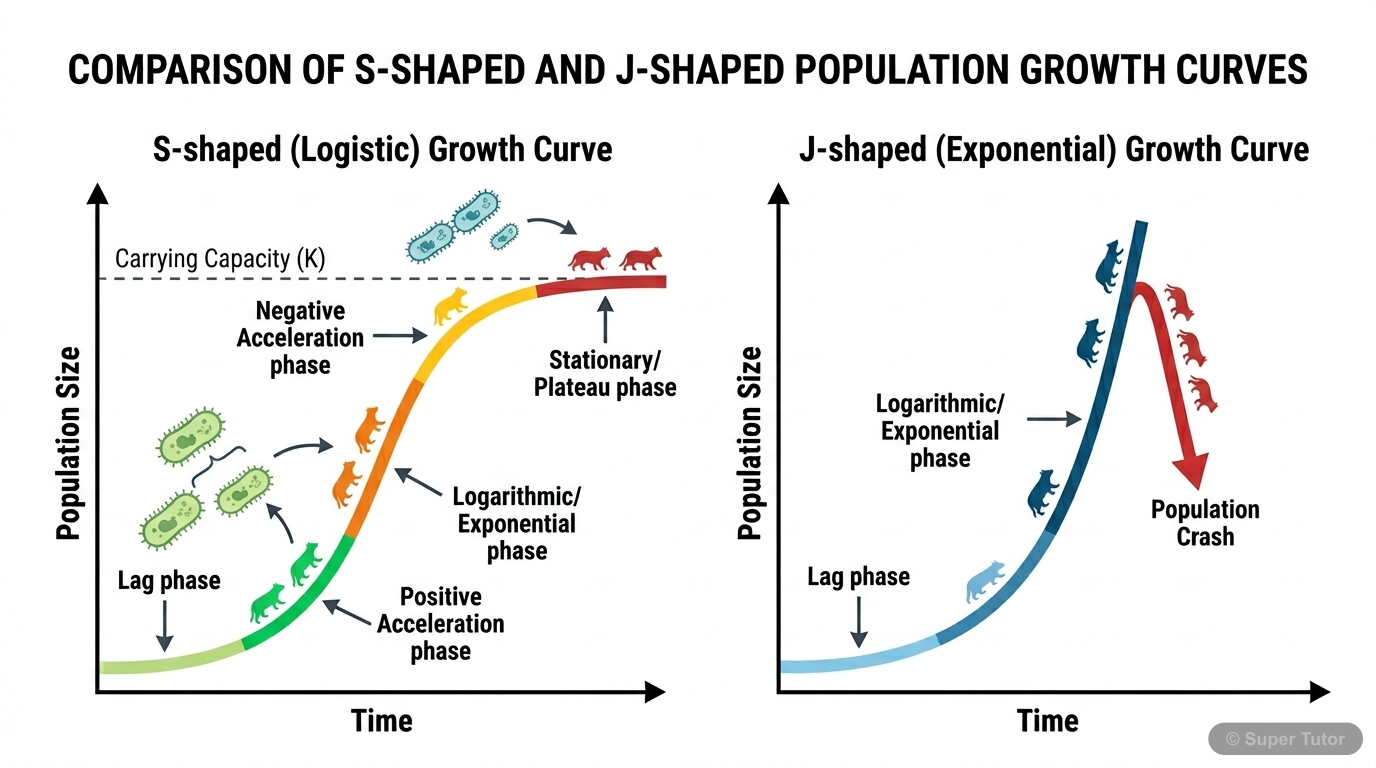
Learn better with visuals Super Tutor has hundreds of illustrations like this across every chapter — all free to try.
Get startedStudy Plan
Learn the Theory
Read the textbook chapter carefully. Note down definitions, formulas, and key concepts.
Practice Problems
Solve textbook exercises and additional practice questions. There are 45 questions available for this chapter.
Revise & Test
Revise key formulas and concepts without looking at notes. Take a practice quiz to test your understanding. Mark weak areas for re-revision.
Spaced Revision
Revisit Natural Environment after a week. Use flashcards for quick recall. Solve previous year questions from this chapter.
What to Focus On
- Ecosystem = Biological environment with living and non-living components
- Natural ecosystems include terrestrial (grasslands, deserts) and aquatic (rivers, ponds)
- Human-designed ecosystems are artificial (gardens, aquariums)
- Autotrophs/Producers: Make their own food (plants, some bacteria)
- Heterotrophs/Consumers: Depend on others for food (animals)
- Primary consumers: Herbivores that eat plants
- Food chain: Linear sequence of who eats whom
- Trophic levels: Producer (I), Primary consumer (II), Secondary consumer (III)
- Grazing food chain: Plants → Herbivores → Carnivores
Common Mistakes to Avoid
Energy flows in cycles just like nutrients, so energy can be recycled in ecosystems
All decomposers are the same as detritivores, and they only eat dead things
Food webs are just multiple food chains put together randomly
Memory Tips
Ecosystem definition and components
Food chain trophic levels
Carbon cycle process
Nitrogen cycle steps
Want a personalised study plan?
Super Tutor creates a day-by-day plan for NIOS Class 10 Science & Tech that adapts to your exam date and pace.
Create My Study Plan — FreeFrequently Asked Questions
What are the important topics in Natural Environment for NIOS Class 10 Science & Tech?
How to score full marks in Natural Environment — NIOS Class 10 Science & Tech?
Sources & Official References
Content is aligned to the official syllabus. Refer to the board website for the latest curriculum.
More resources for Natural Environment
Important Questions
Practice with board exam-style questions
Syllabus
What topics to cover
Revision Notes
Key points for last-minute revision
Flashcards
Quick-fire cards for active recall
Formula Sheet
All formulas in one place
Chapter Summary
Understand the chapter at a glance
Practice Quiz
Test yourself with a quick quiz
Concept Maps
See how topics connect visually
For serious students
Get the full Natural Environment chapter — for free.
Quizzes, flashcards, AI doubt-solver and a step-by-step study plan for NIOS Class 10 Science & Tech.