Natural Environment
NIOS · Class 10 · Science & Tech
Summary of Natural Environment for NIOS Class 10 Science & Tech. Key concepts, important points, and chapter overview.
Interactive on Super Tutor
Studying Natural Environment? Get the full interactive chapter.
Quizzes, flashcards, AI doubt-solver and a step-by-step study plan — built for chapter summary and more.
1,000+ Class 10 students started this chapter today
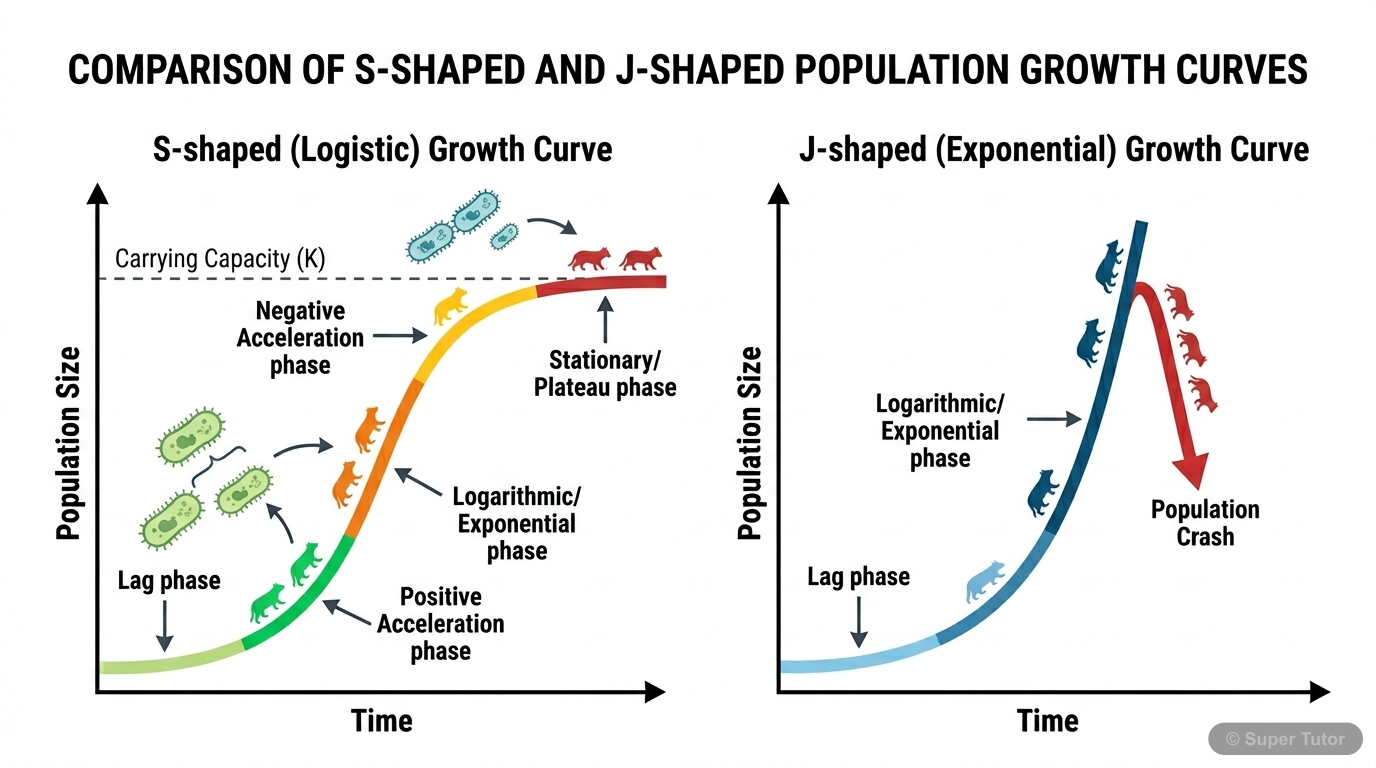
Learn better with visuals Super Tutor has hundreds of illustrations like this across every chapter — all free to try.
Get startedOverview
The natural environment encompasses everything that surrounds us naturally - air, water, soil, plants, animals, and all their interactions. This chapter explores how living (biotic) and non-living (abiotic) components work together in ecosystems, forming complex relationships that maintain life on E
Key Concepts
A biological environment consisting of all
A biological environment consisting of all living organisms in a particular area, along with non-living physical components with which they interact.
Biotic components are living organisms (plants
Biotic components are living organisms (plants, animals, microorganisms). Abiotic components are non-living factors (sunlight, temperature, water, soi
Food chain shows linear transfer
Food chain shows linear transfer of energy from producers to consumers. Food web shows interconnected food chains in an ecosystem. Energy decreases at
Cyclic movement of chemical elements like
Cyclic movement of chemical elements like carbon, nitrogen, and water through living and non-living components. Unlike energy flow, these cycles are c
Special features that allow organisms
Special features that allow organisms to survive in their specific environments. Include structural, functional, and behavioral modifications for aqua
Learning Objectives
- Define ecosystem and understand interdependence between aquatic and terrestrial ecosystems
- Establish relationships between biotic and abiotic components of ecosystems
- Explain interdependence of autotrophs, heterotrophs and saprophytes in biotic communities
- Understand food chains, food webs, trophic levels and energy flow in ecosystems
- Learn about biogeochemical cycles including carbon, nitrogen and water cycles
Frequently Asked Questions
What are the important topics in Natural Environment for NIOS Class 10 Science & Tech?
How to score full marks in Natural Environment — NIOS Class 10 Science & Tech?
Sources & Official References
Content is aligned to the official syllabus. Refer to the board website for the latest curriculum.
More resources for Natural Environment
Important Questions
Practice with board exam-style questions
Syllabus
What topics to cover
Revision Notes
Key points for last-minute revision
Study Plan
Step-by-step plan to ace this chapter
Flashcards
Quick-fire cards for active recall
Formula Sheet
All formulas in one place
Practice Quiz
Test yourself with a quick quiz
Concept Maps
See how topics connect visually
For serious students
Get the full Natural Environment chapter — for free.
Quizzes, flashcards, AI doubt-solver and a step-by-step study plan for NIOS Class 10 Science & Tech.