Thermal Energy
NIOS · Class 10 · Science & Tech
Summary of Thermal Energy for NIOS Class 10 Science & Tech. Key concepts, important points, and chapter overview.
Interactive on Super Tutor
Studying Thermal Energy? Get the full interactive chapter.
Quizzes, flashcards, AI doubt-solver and a step-by-step study plan — built for chapter summary and more.
1,000+ Class 10 students started this chapter today
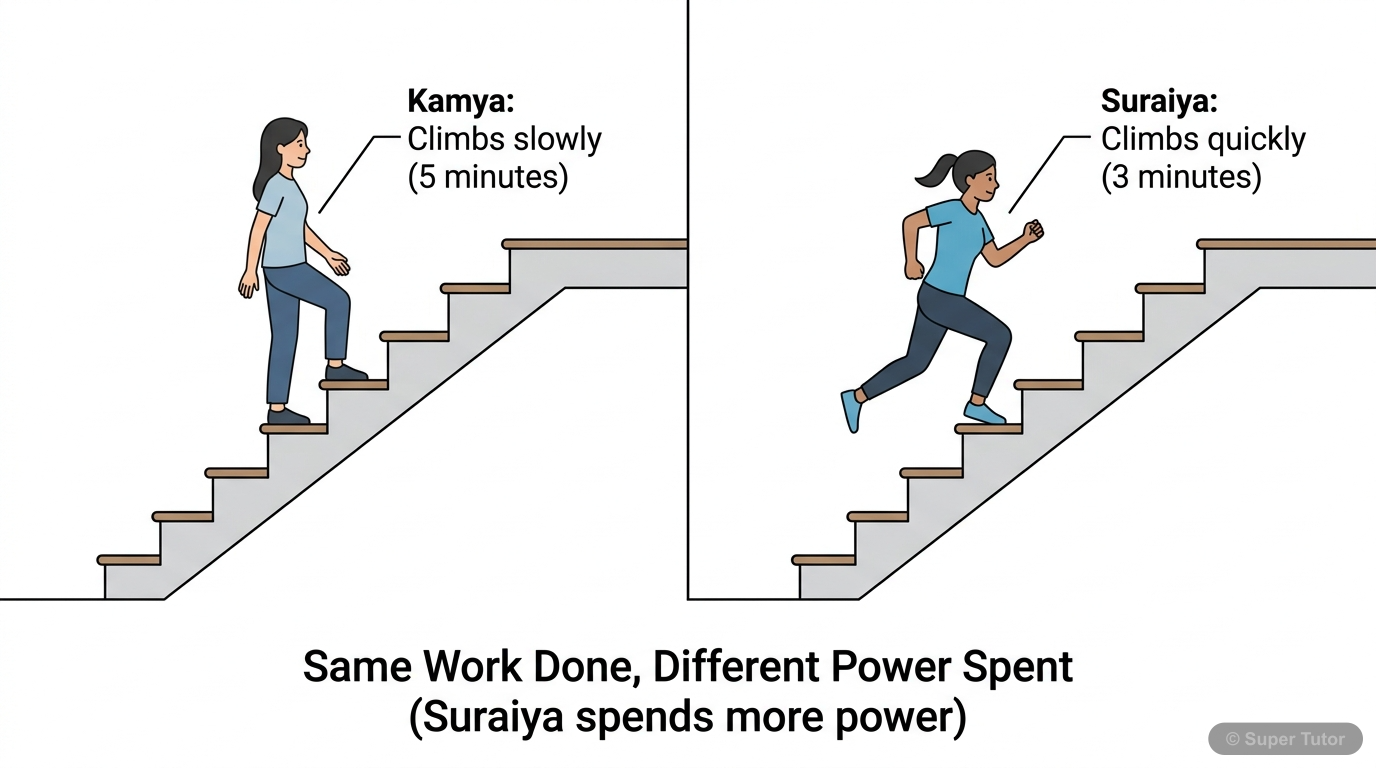
This is just one of 11+ visuals inside Super Tutor's Thermal Energy chapter
Explore the full setOverview
Thermal energy is one of the most common and important forms of energy that affects our daily life. It is the energy that makes us feel hot or cold, drives weather patterns, helps cook our food, and powers thermal power stations. Understanding thermal energy helps us comprehend how heat flows, how m
Key Concepts
Heat is a form of energy
Heat is a form of energy that can do work (like steam lifting a kettle lid), measured in Joules. Temperature is the degree of hotness or coldness of a
Temperature is measured using thermometers containing
Temperature is measured using thermometers containing mercury due to its quick thermal response, uniform expansion, and visibility. Three main scales
When substances are heated
When substances are heated, they can change from solid to liquid (melting) or liquid to gas (vaporization) at constant temperatures. Latent heat is th
Most materials expand when heated due
Most materials expand when heated due to increased molecular motion. Linear expansion affects length (ΔL = αL₀Δt), while volume expansion affects over
Specific heat capacity is the amount
Specific heat capacity is the amount of heat energy needed to raise 1 kg of a substance by 1K temperature. Formula: Q = msΔθ, where Q is heat, m is ma
Learning Objectives
- Distinguish between heat and temperature clearly
- Understand thermal expansion in solids, liquids, and gases
- Learn construction and working of different types of thermometers
- Master temperature scale conversions (Celsius, Fahrenheit, Kelvin)
- Comprehend latent heat and its real-world applications
Frequently Asked Questions
What are the important topics in Thermal Energy for NIOS Class 10 Science & Tech?
How to score full marks in Thermal Energy — NIOS Class 10 Science & Tech?
Sources & Official References
Content is aligned to the official syllabus. Refer to the board website for the latest curriculum.
More resources for Thermal Energy
Important Questions
Practice with board exam-style questions
Syllabus
What topics to cover
Revision Notes
Key points for last-minute revision
Study Plan
Step-by-step plan to ace this chapter
Flashcards
Quick-fire cards for active recall
Formula Sheet
All formulas in one place
Practice Quiz
Test yourself with a quick quiz
Concept Maps
See how topics connect visually
For serious students
Get the full Thermal Energy chapter — for free.
Quizzes, flashcards, AI doubt-solver and a step-by-step study plan for NIOS Class 10 Science & Tech.